Neural Architecture Dynamics
About this quiz
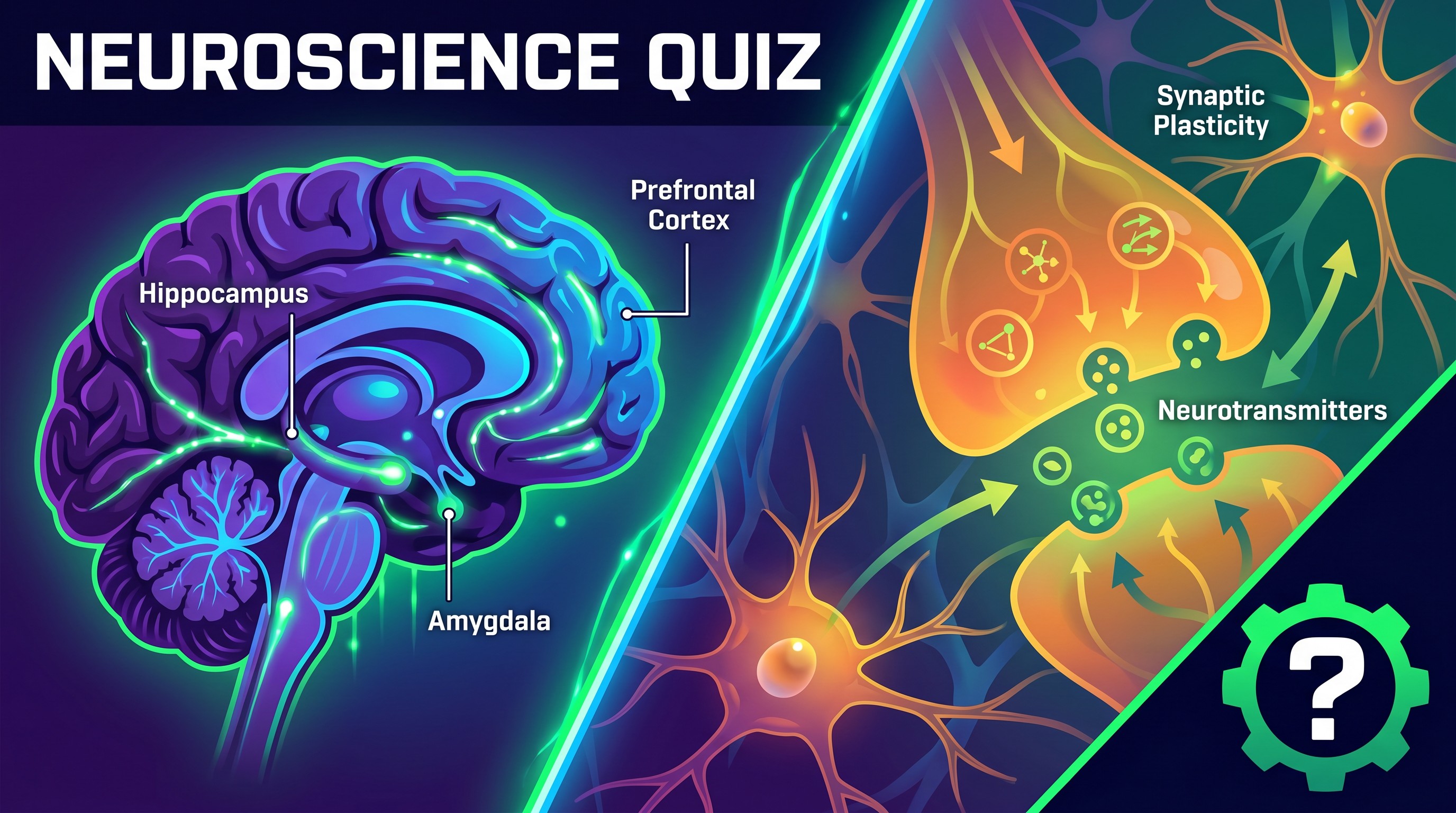
Advanced analysis of brain region function.
What this quiz asks
- Match the fundamental processes of Synaptic Plasticity Mechanisms to their physiological definitions.
- Connect the specific molecular receptors and signaling pathways to their roles within Synaptic Plasticity Mechanisms.
- Match the advanced phenomena of Synaptic Plasticity Mechanisms to their operational definitions in neural circuits.
- Pair the pathological or experimental conditions with the specific disruptions they cause in Synaptic Plasticity Mechanisms.
- Match the fundamental regulatory mechanism with its specific role in maintaining Neurotransmitter Homeostasis within the synaptic cleft.
- Connect the following neurochemical phenomena to their specific impact on maintaining stable Neurotransmitter Homeostasis during sustained neuronal activity.
- Match the pathological state to the failure in Neurotransmitter Homeostasis mechanisms that leads to clinical dysfunction.
- Pair the pharmacological intervention strategy with its specific target in the Neurotransmitter Homeostasis cycle.
- Match the specific sub-regions of the Prefrontal Cortex to their primary functional roles in cognitive integration.
- Connect the following Prefrontal Cortical Integration phenomena to their associated neural mechanism or theoretical construct.
- Pair the following clinical or experimental deficits with the specific Prefrontal Cortical Integration failure they represent.
- Match the integrative neuro-circuitry models to their specific contribution to Prefrontal Cortical Integration.
- Match the following anatomical structures within the Limbic System Connectivity framework to their primary functional roles in emotional processing.
- Connect the specific neural pathways within Limbic System Connectivity to their functional outcomes in behavior and physiology.
- Pair the clinical manifestations of dysregulated Limbic System Connectivity with the specific circuit disruptions likely responsible.
- Associate the advanced neuroimaging/experimental techniques with the specific insights they provide into Limbic System Connectivity.
- Match the fundamental components and signaling molecules involved in Neurovascular Coupling Dynamics to their primary functional role.
- Connect the physiological markers of Neurovascular Coupling Dynamics to the specific regulatory mechanism they characterize.
- Pair the pathological conditions with the specific impairment in Neurovascular Coupling Dynamics that drives their clinical manifestation.
- Match the advanced imaging and experimental paradigms with their specific utility in studying Neurovascular Coupling Dynamics.
- Match the fundamental structural units of Connectomics and Circuit Mapping to their primary function in neural architecture analysis.
- Connect the advanced imaging and analysis techniques to their specific contribution in modern Connectomics and Circuit Mapping.
- Match the specific topological properties of neural circuits to their functional implications in Connectomics and Circuit Mapping research.
- Pair the clinical and pathological phenomena with the specific connectomic disruptions observed in Connectomics and Circuit Mapping studies.
Answer choices and explanations are shown when you take the quiz.
Topics
Synaptic Plasticity MechanismsNeurotransmitter HomeostasisPrefrontal Cortical IntegrationLimbic System ConnectivityNeurovascular Coupling DynamicsConnectomics and Circuit Mapping
Make your own quiz free
Describe any idea in a sentence and Remee builds it for you — stories, games and
quizzes on whatever you or your class are working on. Free to start, no card needed,
and everything you make gets a link you can share anywhere.
Create a free accountSee it for classrooms
Quizzes on Remee
Remee quizzes come in six formats — including image questions, matching,
drag-and-drop and branching — and can be played live with up to 35 people at once,
which makes them work as easily in a classroom as they do on your own.
 Quiz
Quiz