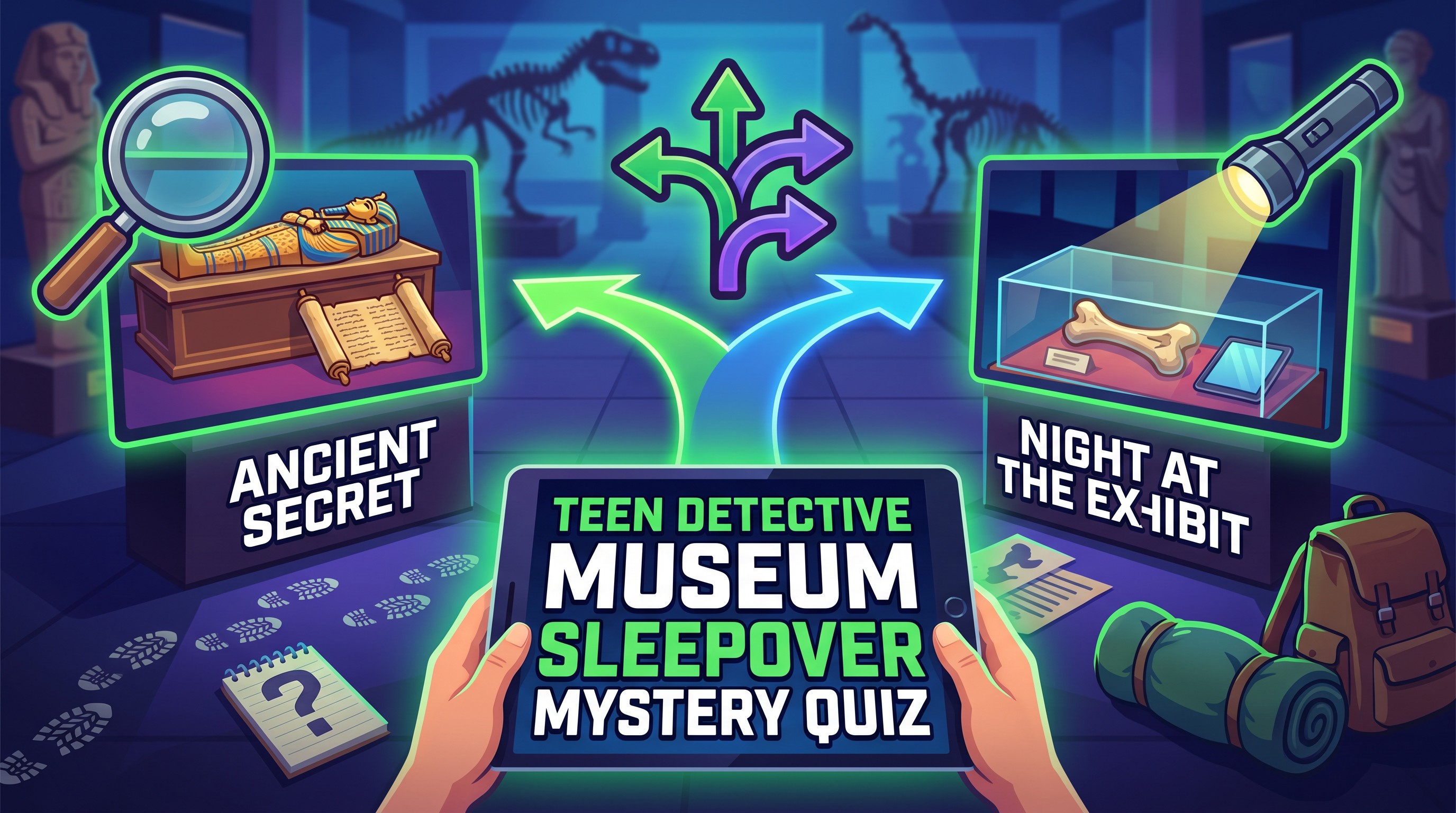
Museum Sleepover Mystery
About this quiz
Solve clues during a night at the museum.
What this quiz asks
- During the museum sleepover, you discover a muddy footprint near the display case. What is the first step in proper Evidence Collection?
- You find a stray thread caught on a display case lock. How should you handle this item to maintain the integrity of your Evidence Collection?
- Multiple pieces of evidence are scattered in the Egyptian wing. Which Evidence Collection strategy ensures the scene remains organized for investigators?
- A witness claims they saw someone near the crime scene, but the area is now crowded with other students. How do you prioritize your Evidence Collection?
- You notice the museum's motion sensors are blinking red in the Hall of Gems. How do you respond to this potential security system alert?
- A keypad near the archives requires a four-digit code. You find a note nearby with the museum's founding year, 1924, and the year of the last renovation, 2015. Which strategy should you use to test the security system?
- The laser grid protecting the golden mask has been bypassed, but the alarm hasn't sounded. What does this suggest about the security system?
- You have located the museum's security mainframe. You must decide how to restore the tripped sensors while avoiding a total system lockdown. What is your move?
- You find a mysterious, unlabeled clay vase in the Egyptian wing. How do you handle this Museum Artifacts discovery?
- You notice a display case containing a golden crown has been slightly shifted. What is your next move regarding the Museum Artifacts?
- Two identical-looking coins are in the vault. One is a replica, and one is an original Museum Artifact. How do you identify the real one?
- You find a rare gemstone that seems to have been removed from a necklace. How do you integrate this into your investigation of the Museum Artifacts?
- You find a security log showing an alarm was triggered at 11:15 PM, but the night guard claims he was checking the Egyptian wing at 11:10 PM. What is your first step to verify the timeline?
- Two artifacts were reported missing. One was last seen at 9:00 PM, and the other at 10:30 PM. How should you organize your investigation of the security footage?
- You find a witness who saw someone near the vault at 11:45 PM, but the surveillance camera shows the vault area was empty then. How do you reconcile this discrepancy?
- You have a list of four events occurring between 10:00 PM and midnight. Which method best ensures you don't lose track of the sequence during your report?
- During the museum sleepover, you notice a faint, powdery residue near a display case. What is your first step in Forensic Observation?
- You find a mysterious footprint leading away from the Egyptian exhibit. How do you analyze this evidence using Forensic Observation?
- You discover a torn piece of fabric caught on a display case latch. What is the most rigorous way to apply Forensic Observation here?
- You have collected a powdery residue, a footprint measurement, and a fabric sample. How do you synthesize these for Forensic Observation?
- You notice a museum guard walking past a display case he already checked, but he is looking at his watch instead of the artifacts. How do you apply Deductive Reasoning to this observation?
- You find a muddy footprint near the Egyptian exhibit. You know the museum floors were cleaned an hour ago, and only three people have entered this wing since then. What is your next logical step?
- A rare gemstone is missing. You have two clues: a witness saw someone wearing a blue jacket near the case, and you found a blue thread caught on the display lock. How do you synthesize this using Deductive Reasoning?
- The lights go out in the museum. You hear footsteps moving away from the main vault. Using Deductive Reasoning, how do you determine the culprit's direction?
Answer choices and explanations are shown when you take the quiz.
Topics
Evidence CollectionSecurity SystemsMuseum ArtifactsChronology and TimelineForensic ObservationDeductive Reasoning
Make your own quiz free
Describe any idea in a sentence and Remee builds it for you — stories, games and
quizzes on whatever you or your class are working on. Free to start, no card needed,
and everything you make gets a link you can share anywhere.
Create a free accountSee it for classrooms
Quizzes on Remee
Remee quizzes come in six formats — including image questions, matching,
drag-and-drop and branching — and can be played live with up to 35 people at once,
which makes them work as easily in a classroom as they do on your own.
 Quiz
Quiz