Engine Mechanics Basics
About this quiz
Explore how engines work and their parts.
What this quiz asks
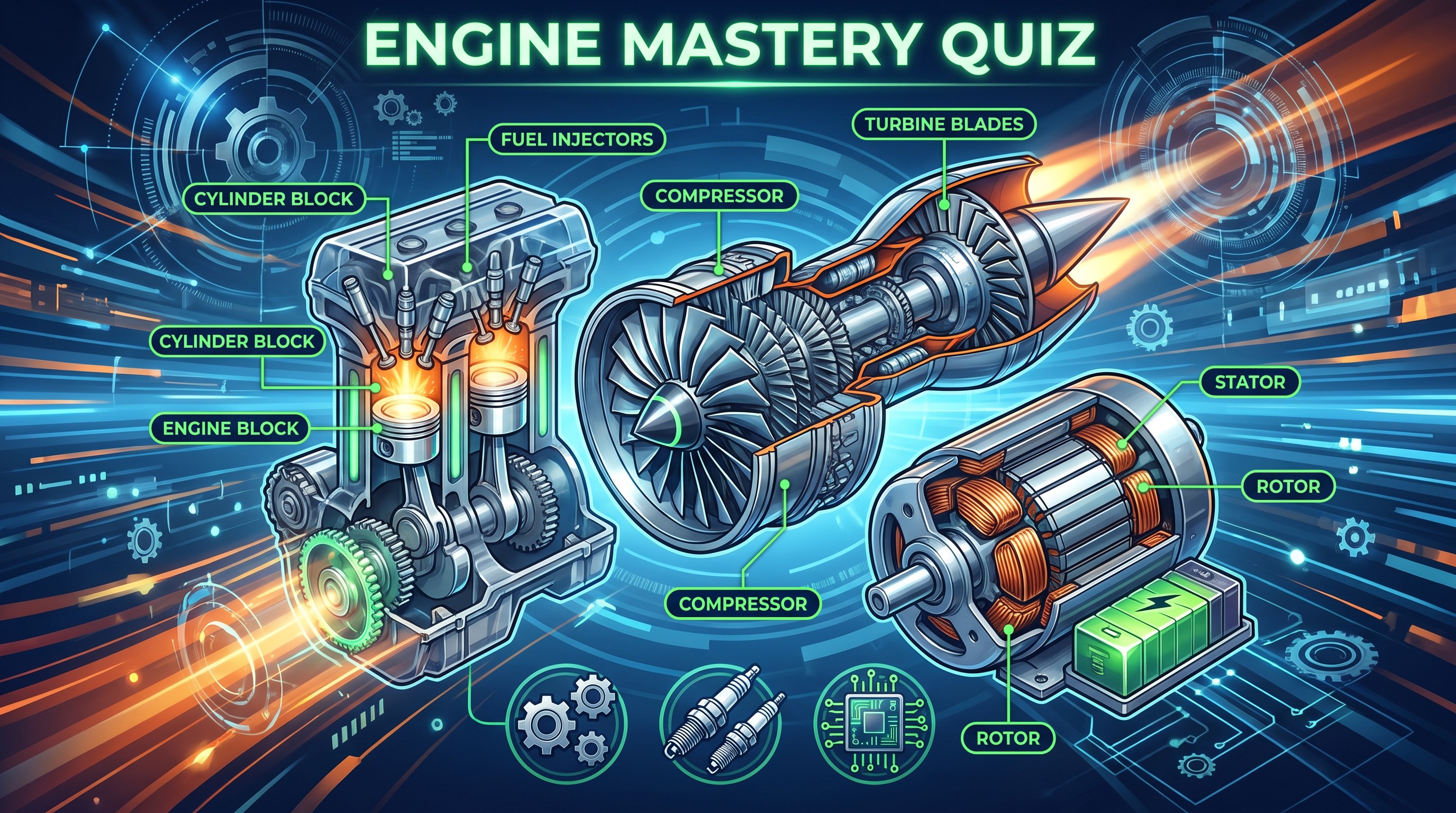
- In an internal combustion engine, what is the primary purpose of the cylinder block where the explosion occurs?
- When observing the movement of a piston within an engine, which sequence describes the conversion of chemical energy into mechanical motion?
- Why must the internal combustion engine have a sealed chamber to operate effectively?
- If an engine fails to produce power despite having fuel and spark, which aspect of Internal Combustion Basics might be compromised based on this visual representation?
- In the context of Essential Engine Components, which part acts as the backbone of the engine, holding the cylinders and other major components together?
- Which component is responsible for converting the linear motion of the pistons into the rotational motion needed to turn the vehicle's wheels?
- Looking at the top of the engine, which component serves as a cover that seals the combustion chamber and houses the valves?
- If an engine is losing compression, which specific small circular parts on the piston are likely worn out and failing to create a tight seal against the cylinder wall?
- In a four-stroke engine cycle, which stage involves the piston moving down to draw a mixture of fuel and air into the combustion chamber?
- When the piston moves upward with both valves closed to squeeze the fuel-air mixture, which stage of the Four-Stroke Cycle Stages is occurring?
- Which stage follows the power stroke in the Four-Stroke Cycle Stages, where the piston pushes spent gases out of the cylinder?
- If a spark plug ignites the compressed mixture and forces the piston downward to create mechanical energy, which stage is being demonstrated?
- In a basic internal combustion engine, which component is responsible for mixing air and fuel before they enter the combustion chamber?
- What is the primary function of the fuel injector in a modern engine's Fuel and Air System?
- If an engine is running 'rich,' what does this mean regarding its Fuel and Air System balance?
- Which component in the Fuel and Air System is responsible for filtering out dust and debris before air enters the intake?
- In a basic electric motor, what is the primary role of the permanent magnets surrounding the spinning coil?
- Looking at the component that reverses the direction of current in a DC motor, what is the name of this part that ensures continuous rotation?
- If you increase the number of turns of wire in the coil of an electric motor, what effect will this have on the motor's performance?
- When comparing an electric motor to an internal combustion engine, which statement best explains why electric motors reach peak torque instantly?
- In an engine cooling system, which component is responsible for circulating the coolant liquid throughout the engine block to absorb heat?
- What is the primary function of the oil filter within an engine's lubrication system?
- When an engine is cold, the thermostat remains closed. How does this help the engine?
- If the lubrication system fails to provide a thin film of oil between moving metal parts, what is the most likely consequence?
Answer choices and explanations are shown when you take the quiz.
Topics
Internal Combustion BasicsEssential Engine ComponentsFour Stroke Cycle StagesFuel and Air SystemsElectric Motor PrinciplesEngine Cooling and Lubrication
Make your own quiz free
Describe any idea in a sentence and Remee builds it for you — stories, games and
quizzes on whatever you or your class are working on. Free to start, no card needed,
and everything you make gets a link you can share anywhere.
Create a free accountSee it for classrooms
Quizzes on Remee
Remee quizzes come in six formats — including image questions, matching,
drag-and-drop and branching — and can be played live with up to 35 people at once,
which makes them work as easily in a classroom as they do on your own.
 Quiz
Quiz