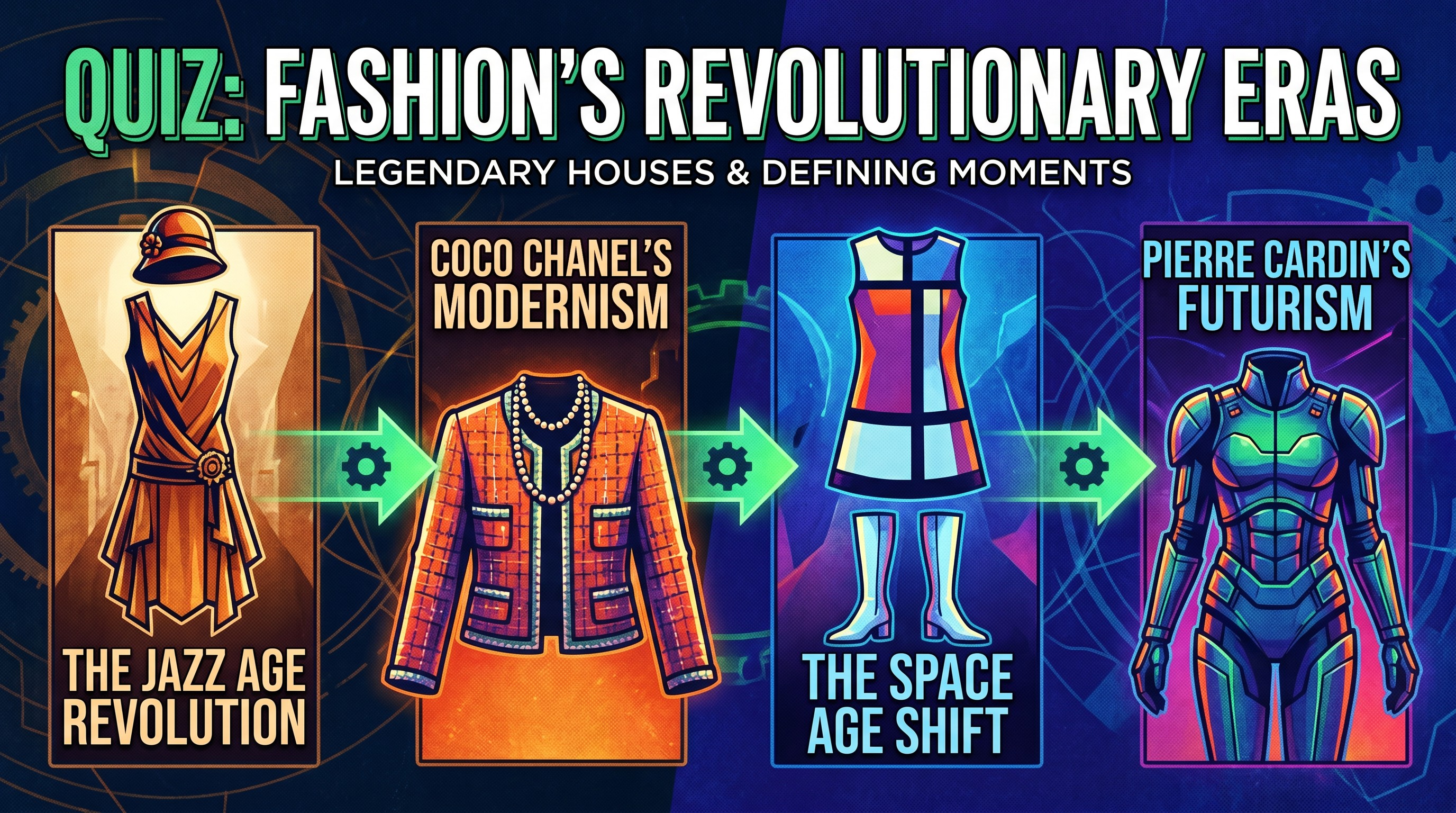
Fashion House Evolution
About this quiz
Analyzing iconic houses and era shifts.
What this quiz asks
- Match the pioneering fashion figure with their foundational contribution to the Haute Couture Foundations era.
- Connect the specific design innovation to the historical house that implemented it during the development of Haute Couture Foundations.
- Match the foundational couture technique to its specific influence on the evolution of 19th and early 20th-century fashion house standards.
- Analyze the relationship between the following couture house practices and their broader impact on the industry's structural development.
- Match the following legendary fashion houses with their iconic post-war silhouette innovations that defined the era.
- Connect the specific design philosophy of these houses to the Post-War Silhouette Shifts they championed during the late 1940s and 1950s.
- Evaluate the relationship between these legendary fashion houses and their signature contributions to the evolution of post-war garment construction.
- Synthesize the impact of these houses on the Post-War Silhouette Shifts by matching them with the primary aesthetic outcome of their signature techniques.
- Match the following iconic fashion houses to their foundational contributions to Ready-to-Wear Industrialization, which shifted couture into accessible luxury.
- Connect the following innovations in Ready-to-Wear Industrialization to the specific manufacturing or distribution shift they represent in the fashion industry.
- Analyze the relationship between these historical Ready-to-Wear Industrialization strategies and their long-term impact on the luxury fashion business model.
- Synthesize the impact of Ready-to-Wear Industrialization by matching these strategic shifts to their specific consequences for the global fashion landscape.
- Match these pioneering avant-garde designers with their signature conceptual contributions that defied traditional couture norms.
- Align these avant-garde fashion houses with the specific philosophical disruption they introduced to the industry.
- Connect the following avant-garde design techniques to their primary conceptual intent in the history of legendary fashion houses.
- Evaluate the relationship between these avant-garde designers and their specific impact on the evolution of fashion semiotics.
- Match the fundamental element of luxury branding with its primary semiotic function in the context of high fashion houses.
- Connect the specific luxury branding strategy to the fashion house that famously utilized it to revolutionize their market position.
- Pair the semiotic concept with its analytical application in understanding how legacy fashion houses maintain relevance in contemporary markets.
- Match the strategic branding evolution to the specific semiotic outcome observed in the history of legendary fashion houses.
- Match the following digital innovations with the fashion heritage concepts they modernize within the Digital Transformation of Heritage framework.
- Connect the specific digital strategy to the fashion house objective it addresses under the Digital Transformation of Heritage concept.
- Evaluate how these advanced digital tools impact the core tenets of the Digital Transformation of Heritage.
- Synthesize the relationship between these emerging technologies and the strategic evolution of legendary fashion houses within the Digital Transformation of Heritage concept.
Answer choices and explanations are shown when you take the quiz.
Topics
Haute Couture FoundationsPost War Silhouette ShiftsReady to Wear IndustrializationAvant Garde Design PhilosophyLuxury Branding and SemioticsDigital Transformation of Heritage
Make your own quiz free
Describe any idea in a sentence and Remee builds it for you — stories, games and
quizzes on whatever you or your class are working on. Free to start, no card needed,
and everything you make gets a link you can share anywhere.
Create a free accountSee it for classrooms
Quizzes on Remee
Remee quizzes come in six formats — including image questions, matching,
drag-and-drop and branching — and can be played live with up to 35 people at once,
which makes them work as easily in a classroom as they do on your own.
 Quiz
Quiz