 Lesson
This lesson explores the engineering behind acoustic stealth and the science of sonar, revealing how submarines remain invisible to sound.

Have you ever wondered how a massive submarine stays hidden in the ocean? It is not just about being deep; it is about mastering the science of complete, total silence.
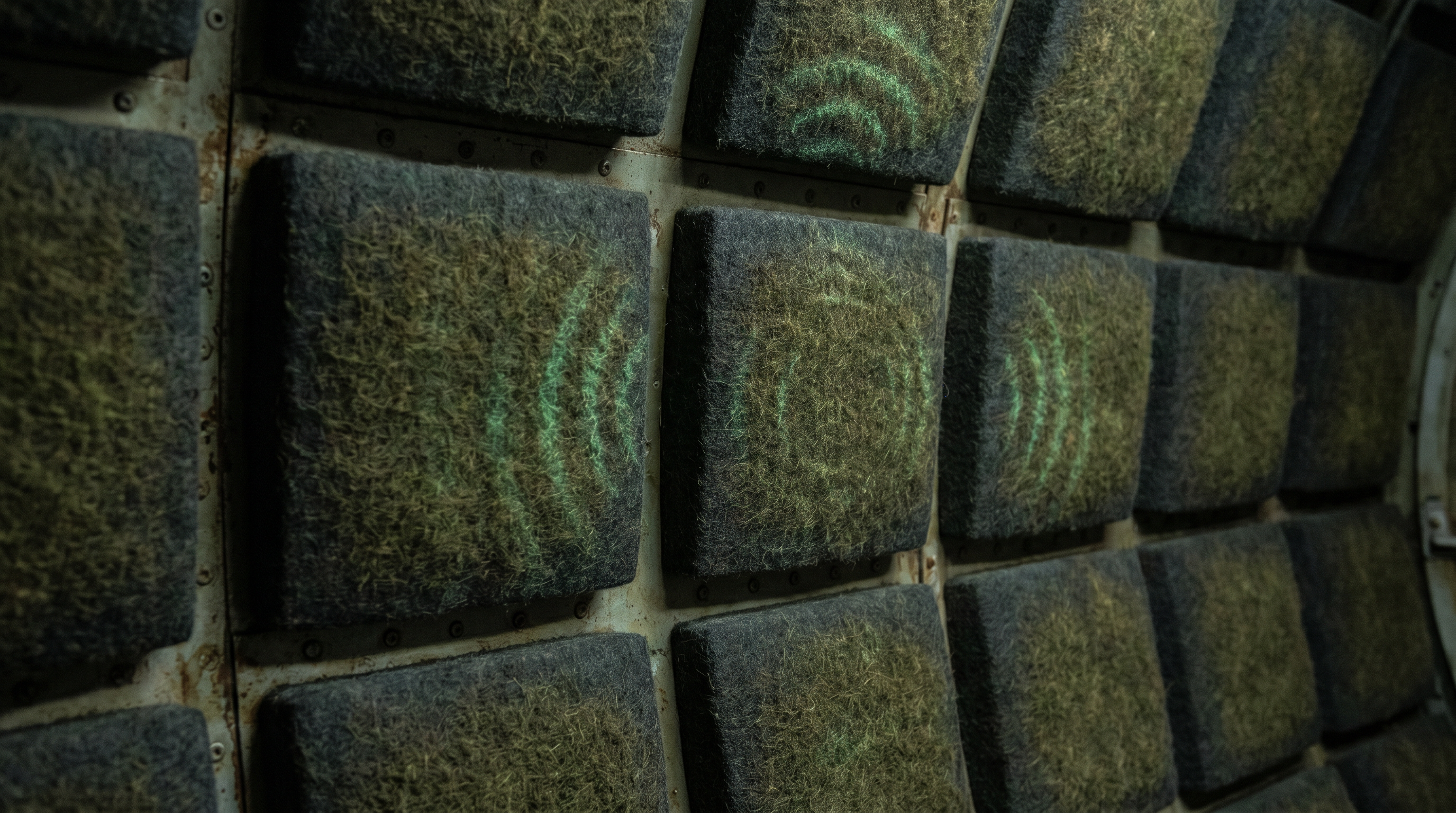
Submarines use special rubber tiles on their outer hulls. These tiles act like heavy blankets for sound, soaking up vibrations so they do not bounce back to listening ears nearby.

Inside, engines sit on soft, bouncy mounts. These act like shock absorbers in a car, preventing the clanking and whirring of machines from traveling through the hull into the water.

Sonar acts like a flashlight beam in the dark. If you shine a light on a mirror, it reflects back. If you shine it on velvet, it does not. Which surface reflects sound best?

Active sonar sends out loud pings that bounce off objects to reveal their location. It is a very effective way to map the ocean floor or find hidden things.

Many believe submarines are invisible to all sensors. Actually, they are never perfectly silent; they just try to match the background noise of the ocean to blend in perfectly.

We have learned how materials and engineering keep subs quiet and how sonar maps the dark. But how do whales use their own natural sonar to hunt in the pitch-black?
Describe any idea in a sentence and Remee builds it for you — stories, games and quizzes on whatever you or your class are working on. Free to start, no card needed, and everything you make gets a link you can share anywhere.
Remee turns any idea into an illustrated story, a playable game, or an interactive quiz — at home or in the classroom.