 Lesson
This lesson explores the logarithmic distribution of leading digits in natural data and demonstrates how this predictable pattern serves as a mathematical lie detector.

Did you know that in many real-world lists, the number '1' appears as the first digit far more often than any other? It isn't random; it is a fascinating mathematical rule.

This is Benford's Law. It describes the frequency of leading digits in datasets like river lengths, population counts, or even the stock market, showing they follow a specific, predictable curve.

The mechanism relies on logarithmic growth. As a value grows exponentially—like money in a bank or bacteria in a dish—it spends more time passing through the 100s than the 900s.

If you look at a list of your local city's street addresses, will the first digits follow this curve? Which digit do you think will appear most often in your own house number list?

Because natural data follows this law, accountants use it to find fraud. If someone makes up numbers, they usually pick digits randomly, which creates a flat, unnatural distribution of data.

People often assume numbers appear with equal frequency, like rolling a die. But in nature, growth happens in stages, meaning small leading digits are mathematically favored over larger ones.
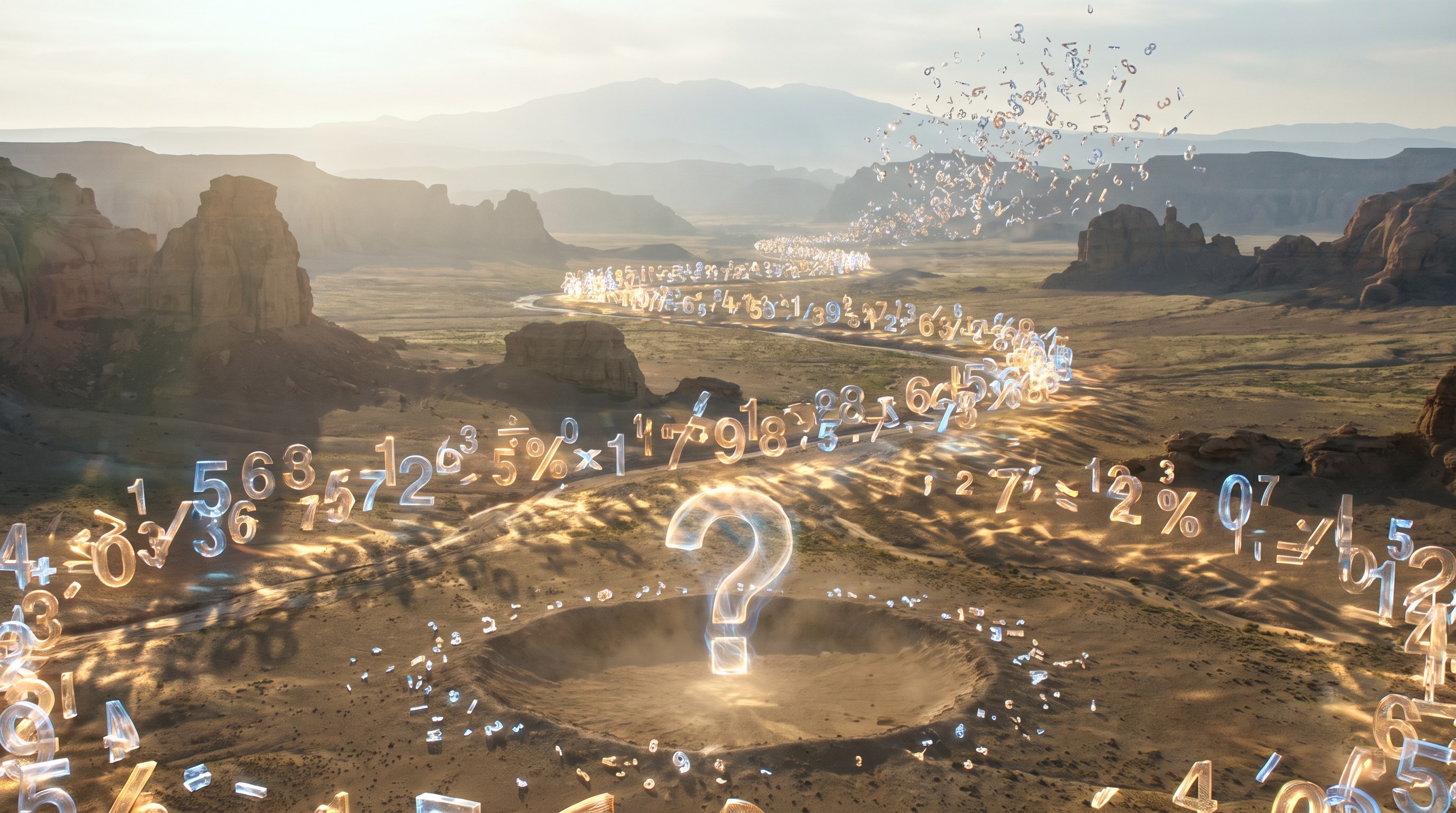
Benford's Law reveals the hidden structure in our world. But wait—why does this law fail for human-assigned numbers like phone numbers or zip codes? That is a mystery for us to solve.
Describe any idea in a sentence and Remee builds it for you — stories, games and quizzes on whatever you or your class are working on. Free to start, no card needed, and everything you make gets a link you can share anywhere.
Remee turns any idea into an illustrated story, a playable game, or an interactive quiz — at home or in the classroom.