 Lesson
This lesson explores the fascinating physiology of an octopus, detailing its circulatory system, sensory capabilities, and unique skeletal structure.
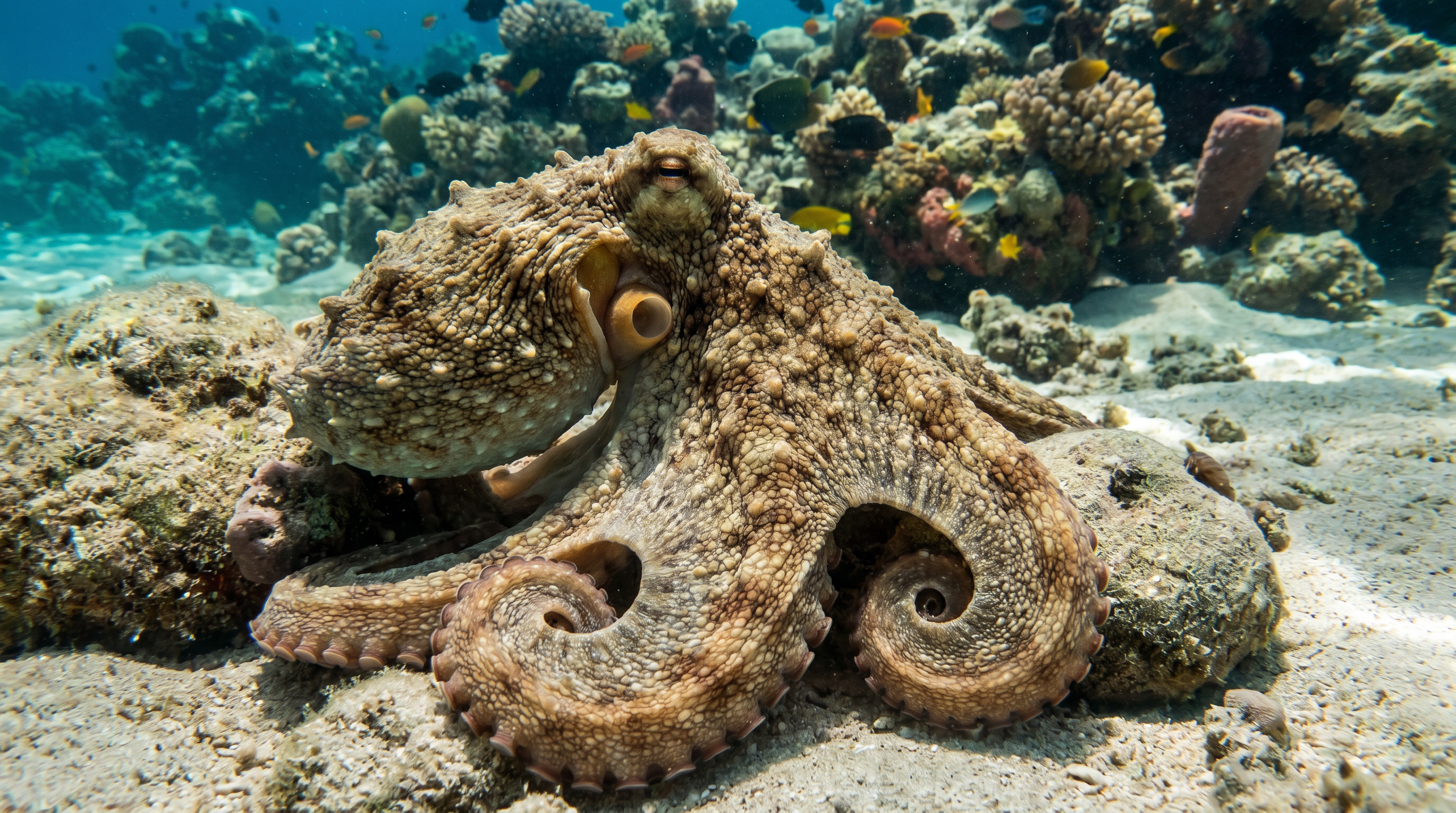
Did you know the ocean hides a master of disguise? Octopuses are not just clever hunters; they have a body built in a truly unique way that keeps them thriving underwater.
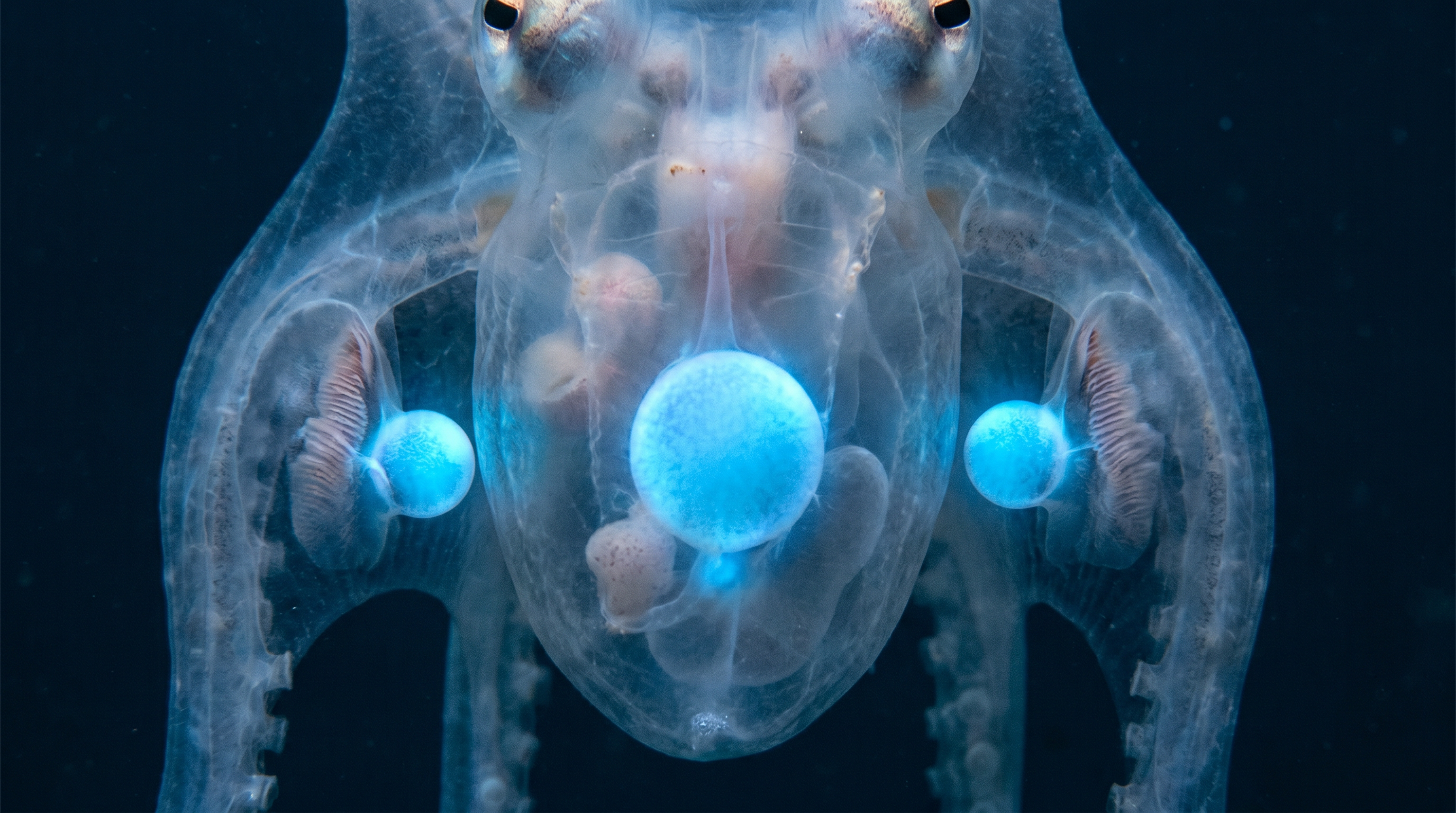
An octopus has three hearts! Two hearts pump blood to the gills to get oxygen, while the third heart works hard to send that oxygen-rich blood to the rest of its body.
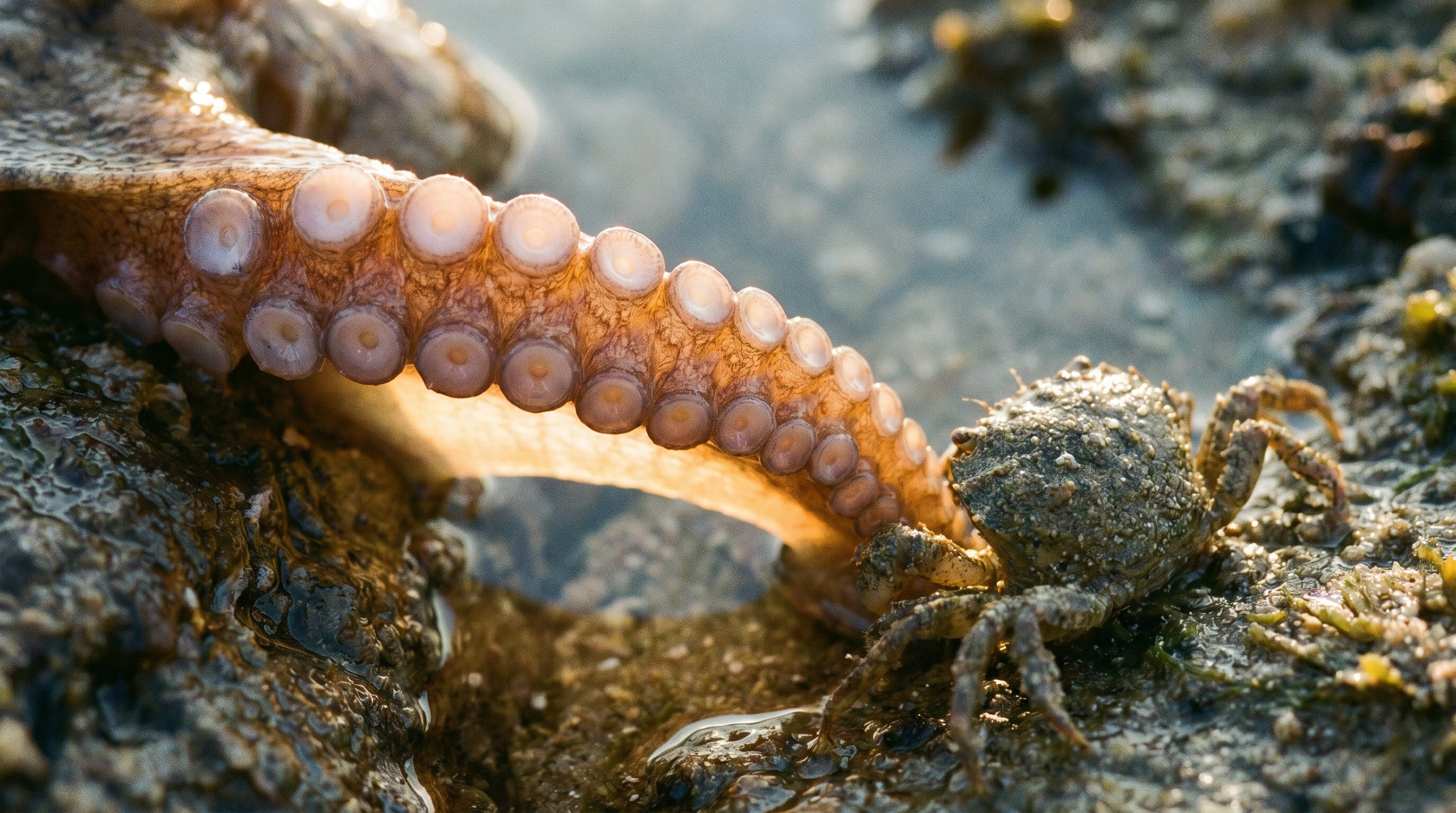
These creatures taste with their arms! Each arm is covered in hundreds of sensitive suckers that can detect chemicals in the water, helping them find food without even seeing it.
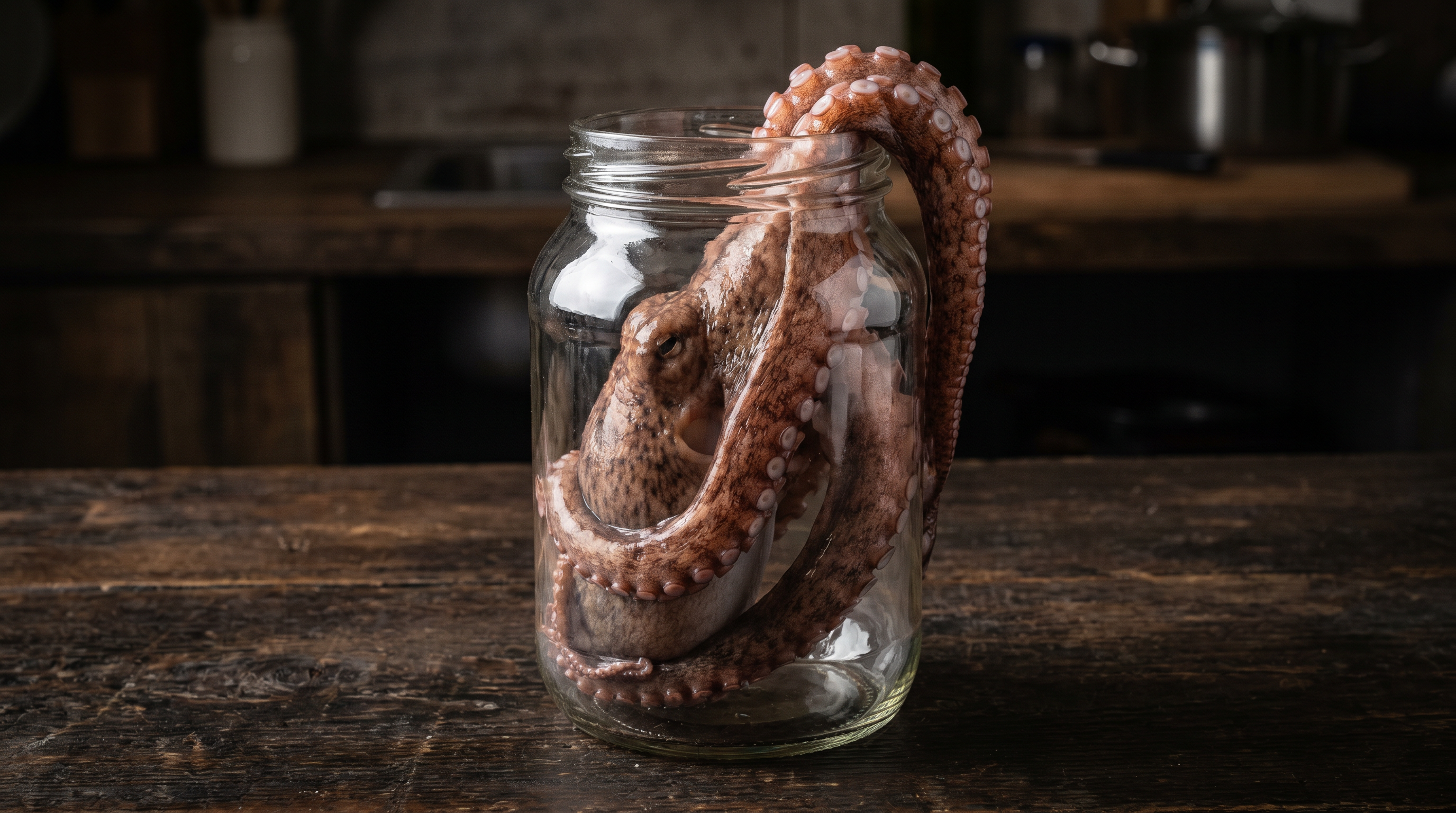
Octopuses have no bones, only a tiny, hard beak. If their beak can fit through a hole, their entire body can follow. How small do you think a hole can be for them?
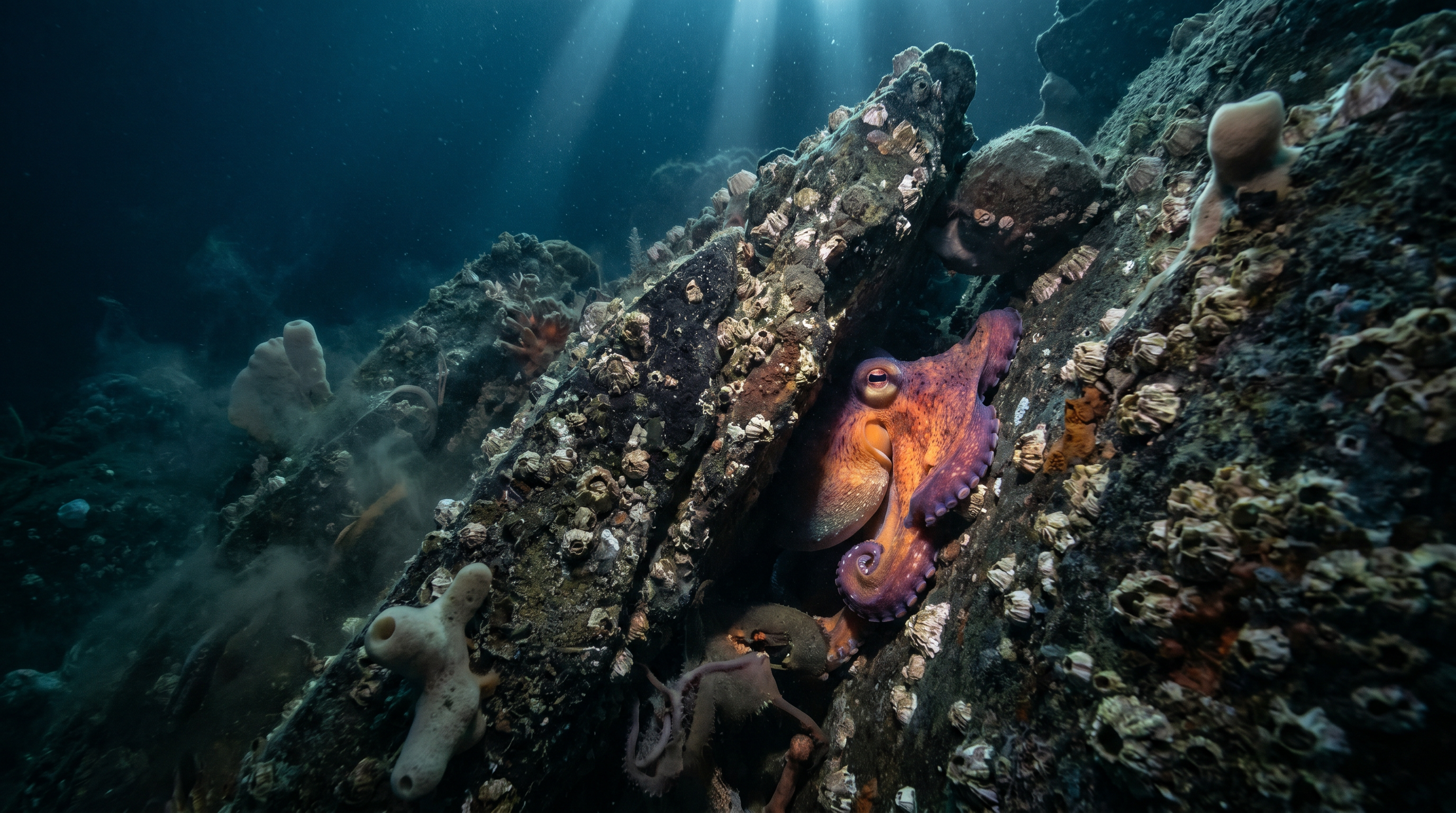
In the wild, this flexibility is a superpower. It allows them to hide in tiny crevices between rocks to stay safe from larger predators while they wait for their next meal.
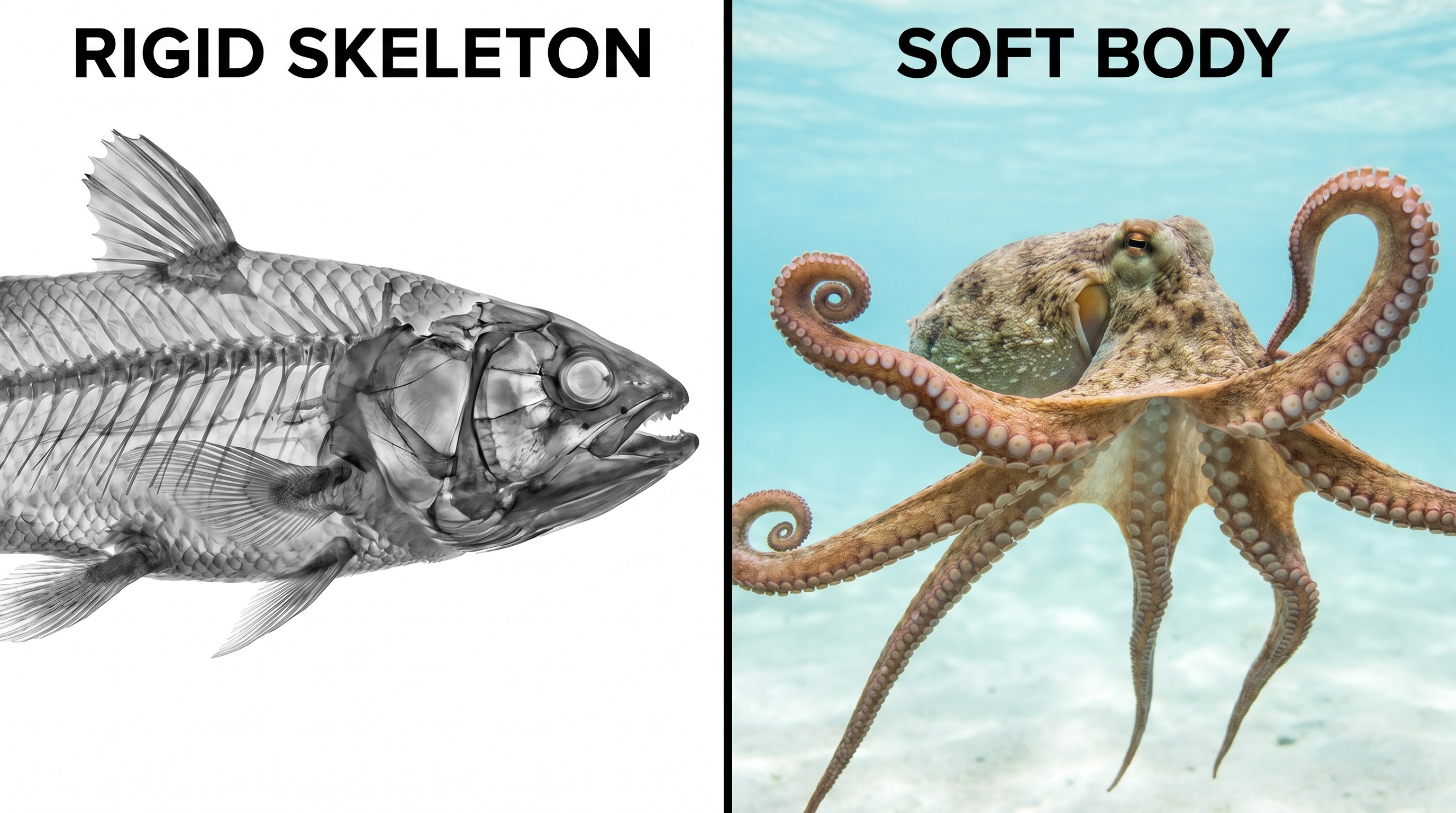
Some people think octopuses are just like fish, but they are actually mollusks! Unlike fish with rigid skeletons, their lack of bones is exactly what makes them such expert escape artists.
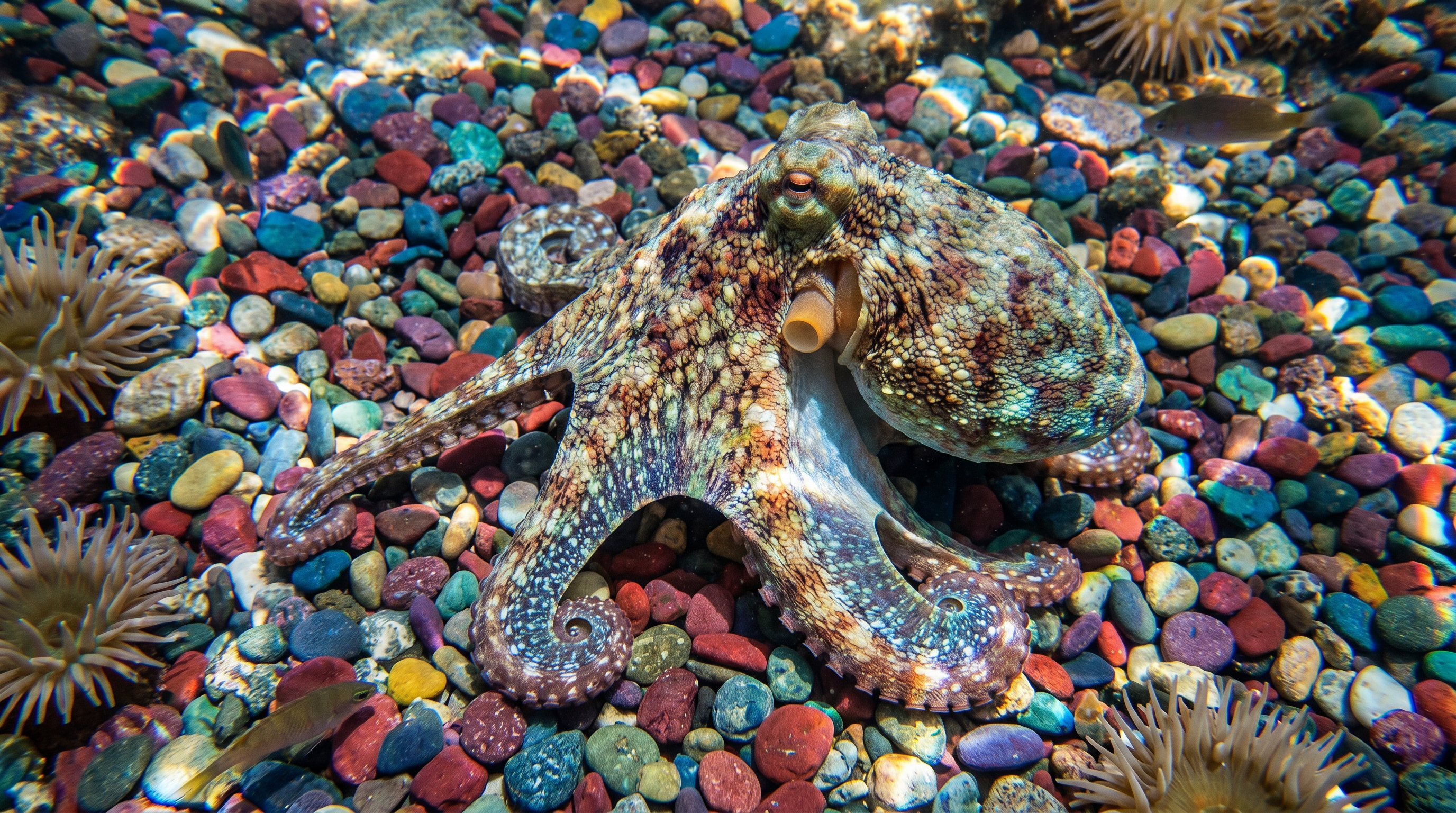
We have learned about their three hearts, tasting arms, and boneless bodies. But here is a mystery: how do they change their skin color and texture in a split second? That is next!
Describe any idea in a sentence and Remee builds it for you — stories, games and quizzes on whatever you or your class are working on. Free to start, no card needed, and everything you make gets a link you can share anywhere.
Remee turns any idea into an illustrated story, a playable game, or an interactive quiz — at home or in the classroom.