 Lesson
This lesson explores how inorganic chemists build intricate, porous structures at the molecular level to trap gases and catalyze reactions.
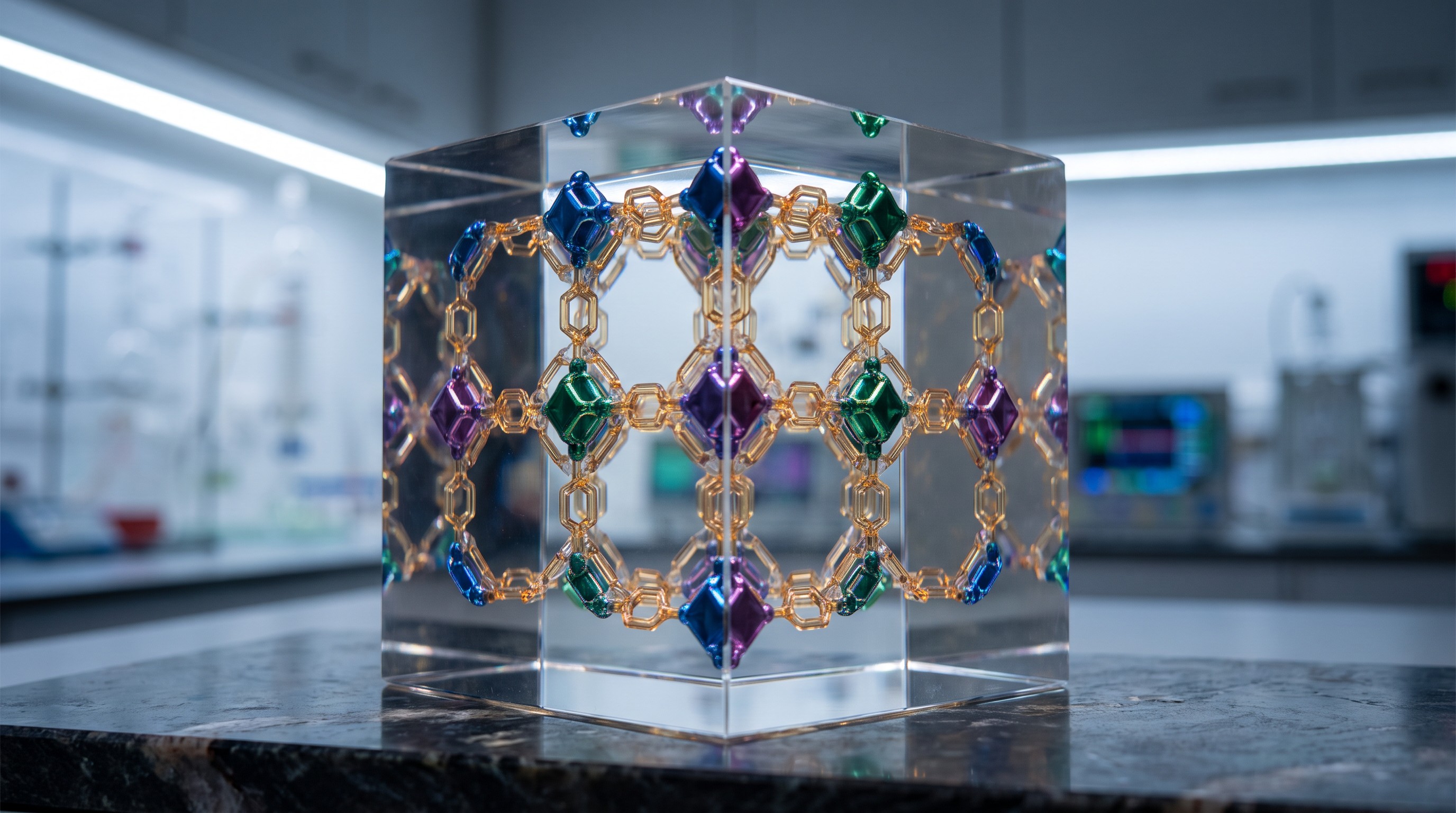
Beyond simple minerals, we can now design complex inorganic frameworks. These synthetic structures are built like molecular scaffolding, creating vast, hidden spaces inside solid materials to trap specific molecules.

These materials are called Metal-Organic Frameworks, or MOFs. They consist of metal ions acting as anchors, joined by rigid molecular 'struts' to create a highly organized, repeating, and porous three-dimensional grid.

The magic happens when we tune the size of these pores. By changing the length of the struts, we create custom-sized tunnels that allow certain gases to enter while blocking others.
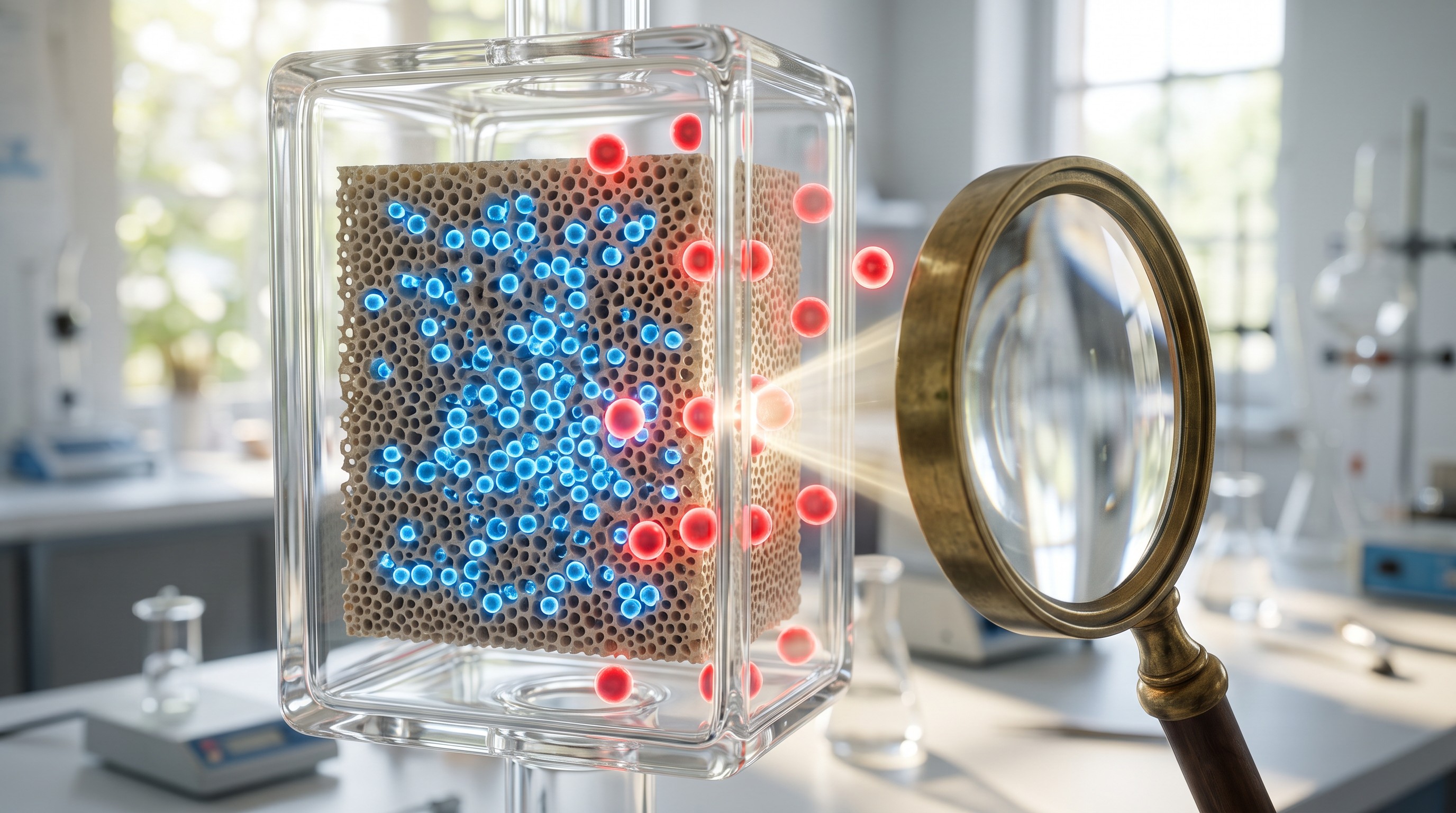
Imagine you have a sponge made of glass. If we could change its hole size to catch only carbon dioxide from the air, how would you test if it is actually working?

We use these systems to solve real-world problems, like pulling fresh water from dry desert air. The pores capture water vapor at night and release it as liquid during the day.
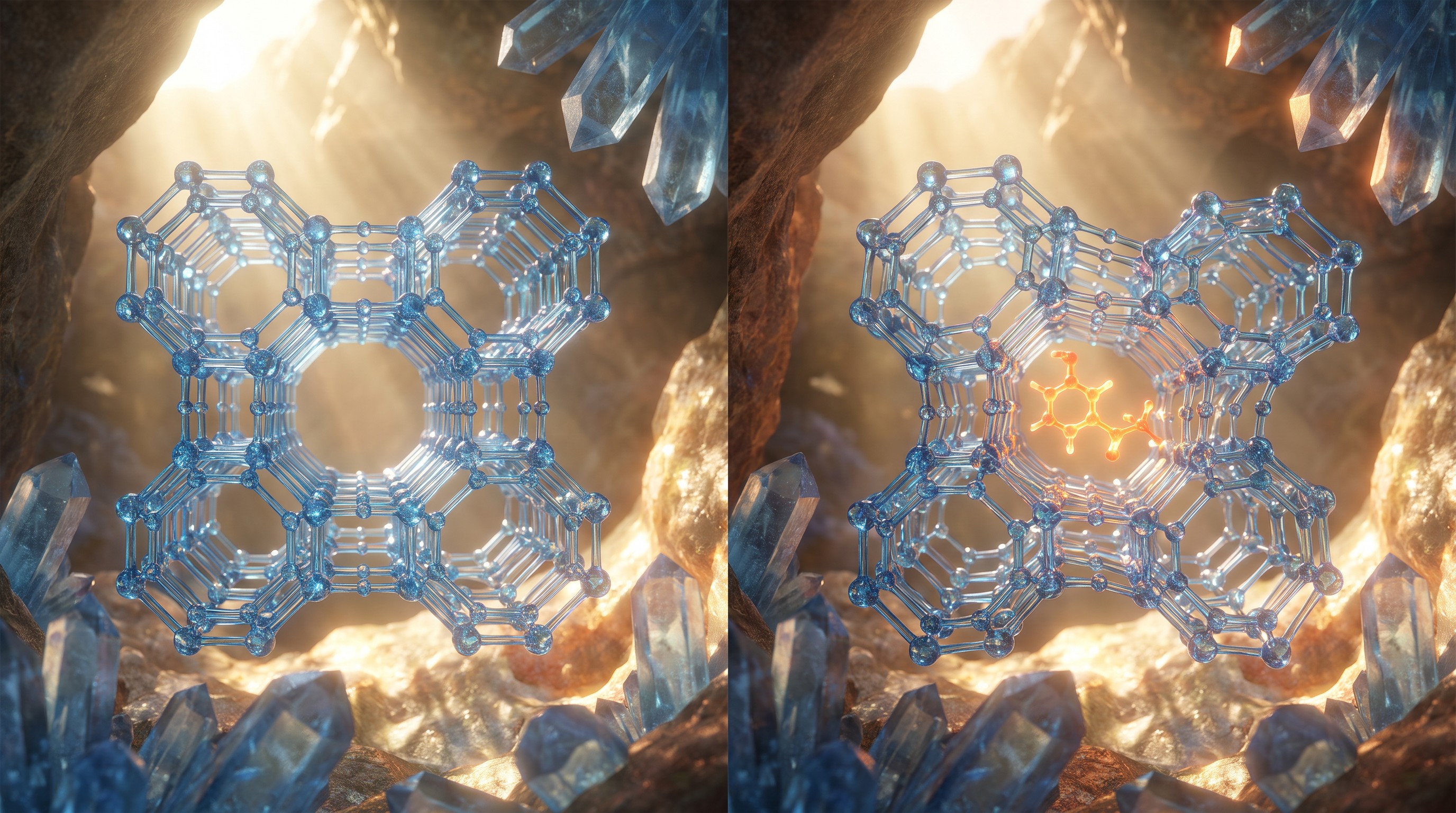
Some think these materials are just static containers. In reality, they are dynamic; they can flex, breathe, and change their shape to 'grab' molecules more tightly when the environment shifts.

We have learned to engineer matter at the atomic scale. But if we can build these tiny machines to trap gases, could we one day build inorganic systems that mimic life itself? That is the next mystery.
Describe any idea in a sentence and Remee builds it for you — stories, games and quizzes on whatever you or your class are working on. Free to start, no card needed, and everything you make gets a link you can share anywhere.
Remee turns any idea into an illustrated story, a playable game, or an interactive quiz — at home or in the classroom.