 Lesson
This StoreMee explores evolutionary adaptations, defining them, explaining natural selection, and showcasing real-world examples, while dispelling myths and sparking further curiosity about environmental change.
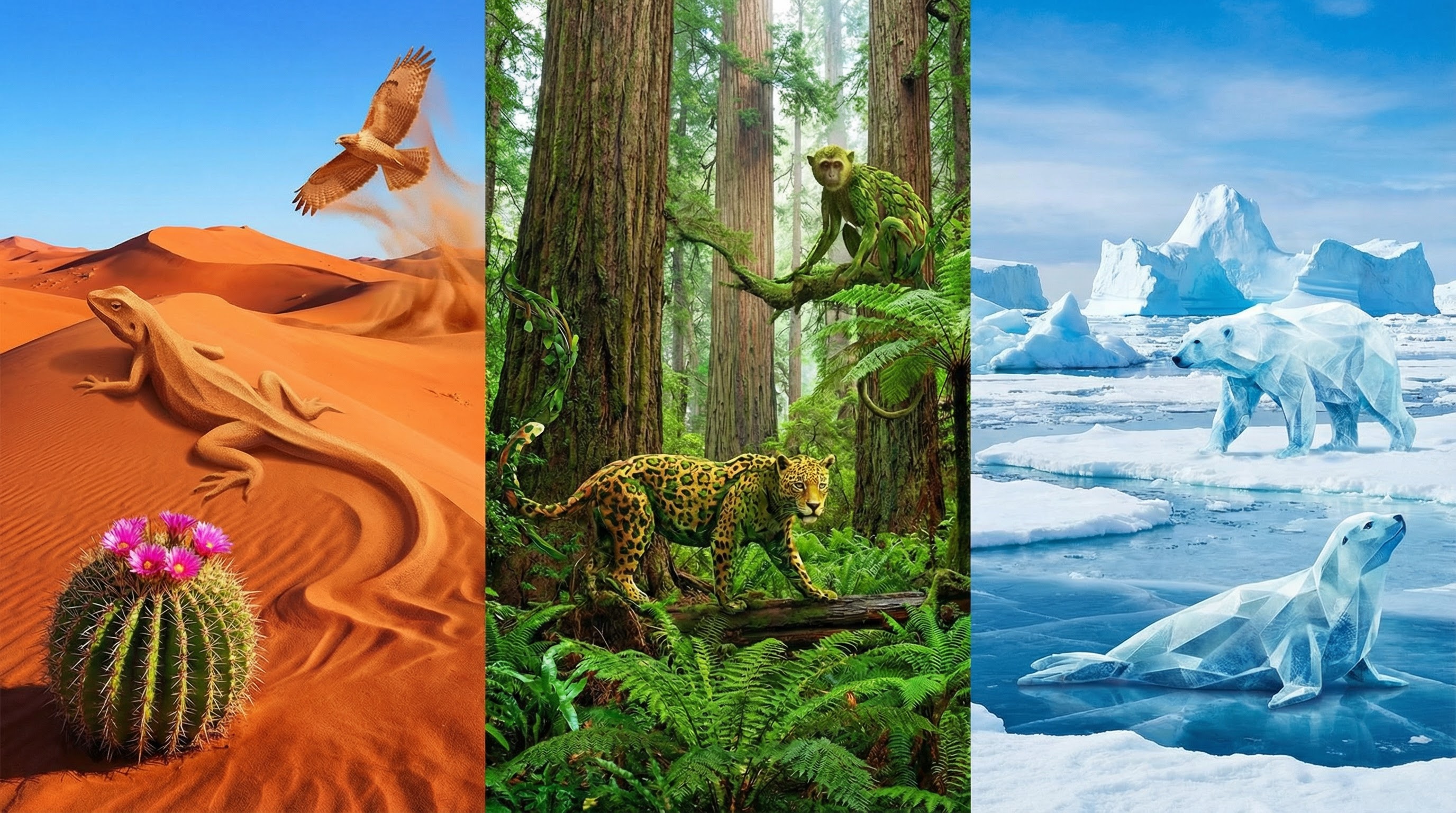
How do animals survive in Earth's harshest places? From scorching deserts to freezing poles, life finds a way. It's all thanks to incredible evolutionary adaptations, nature's ingenious solutions to extreme challenges.
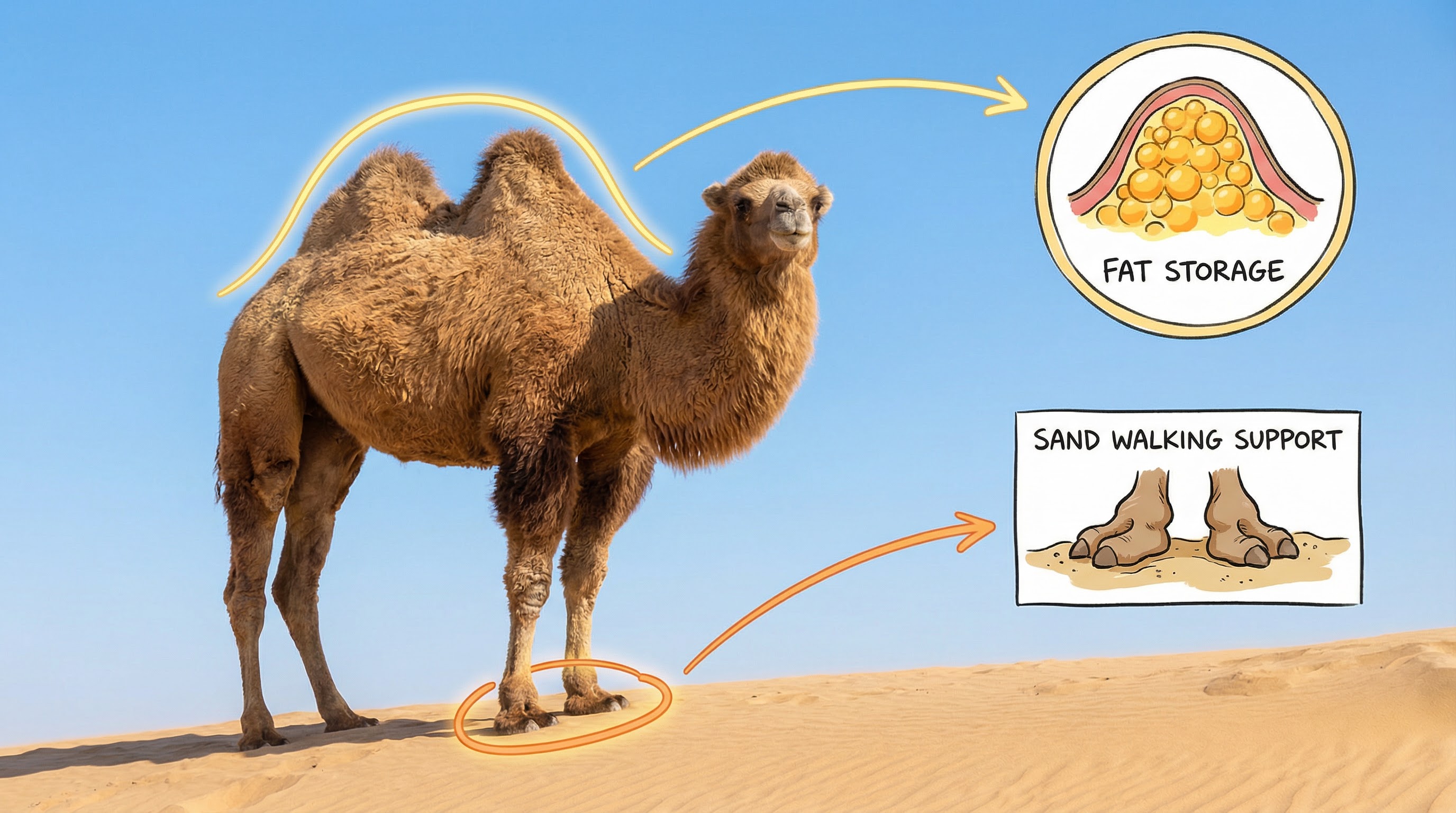
Adaptations are special features or behaviors that help an organism survive and reproduce in its specific environment. These traits develop over many generations, making creatures perfectly suited to their homes.
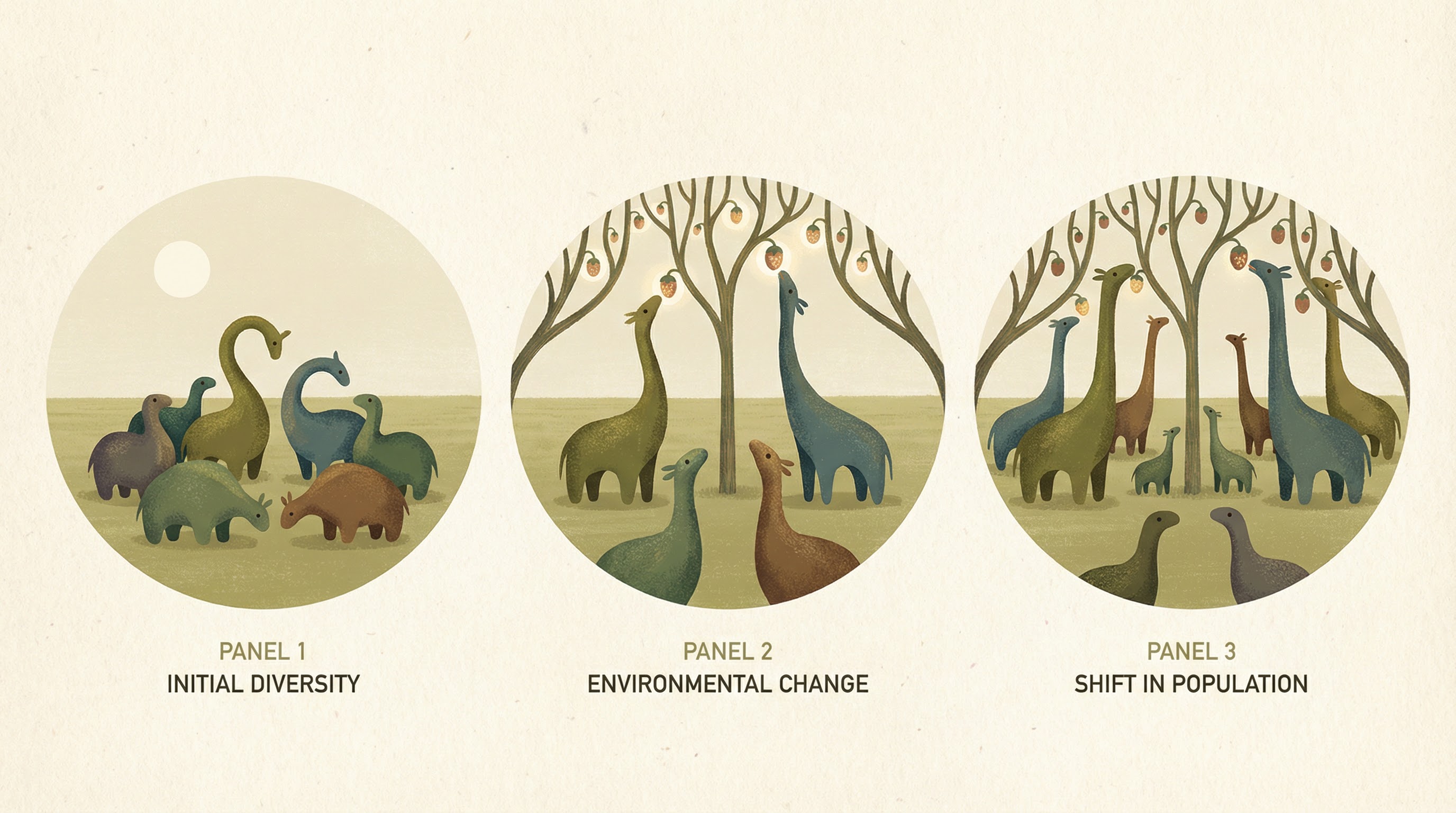
This amazing process is driven by natural selection. Individuals with advantageous traits are more likely to survive, reproduce, and pass those traits to their offspring. Slowly, species change and adapt.
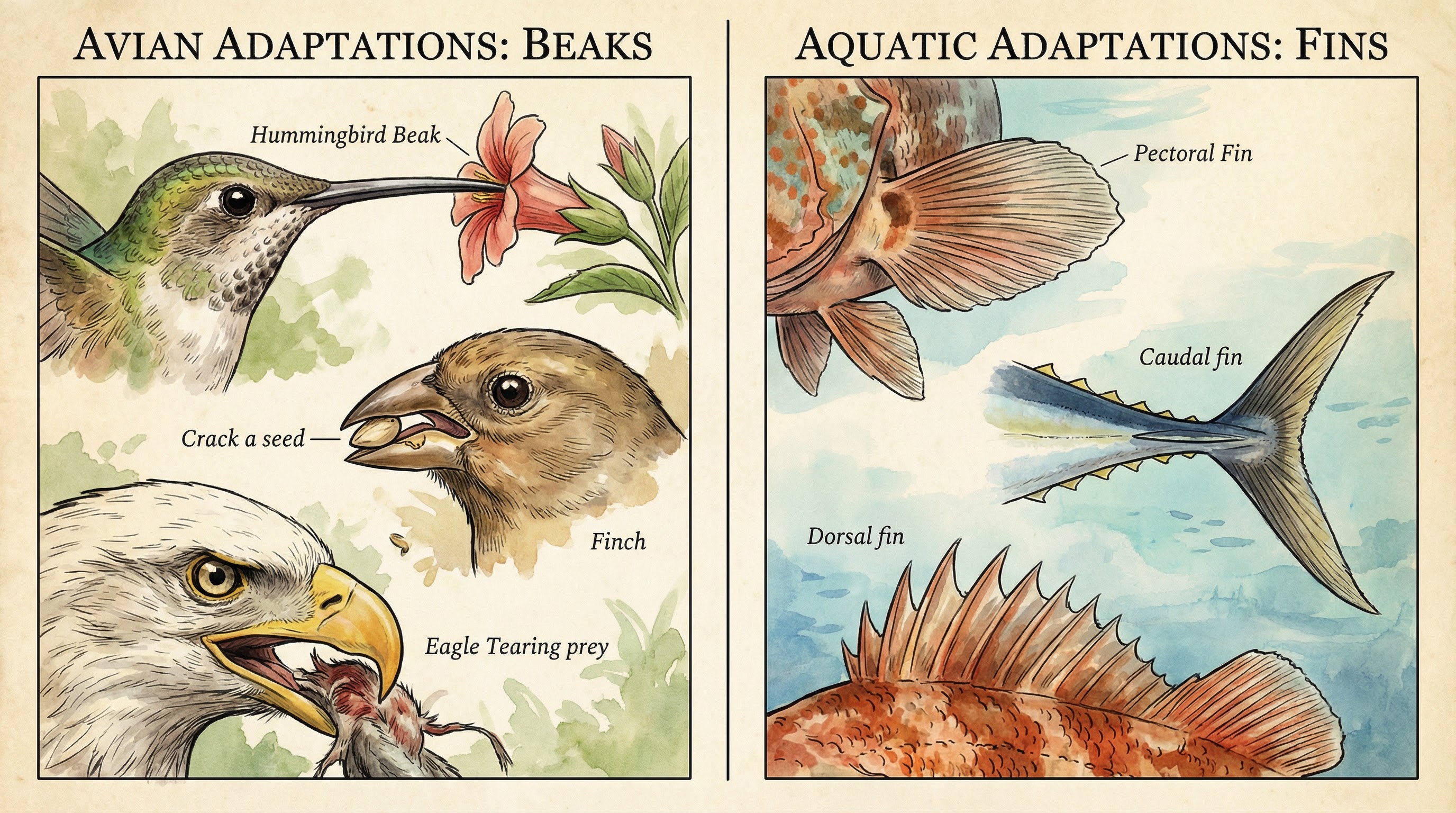
Next time you see a bird's beak or a fish's fins, look closely. How do their shapes seem perfectly designed for what they eat or how they move? What specific adaptations do you observe?
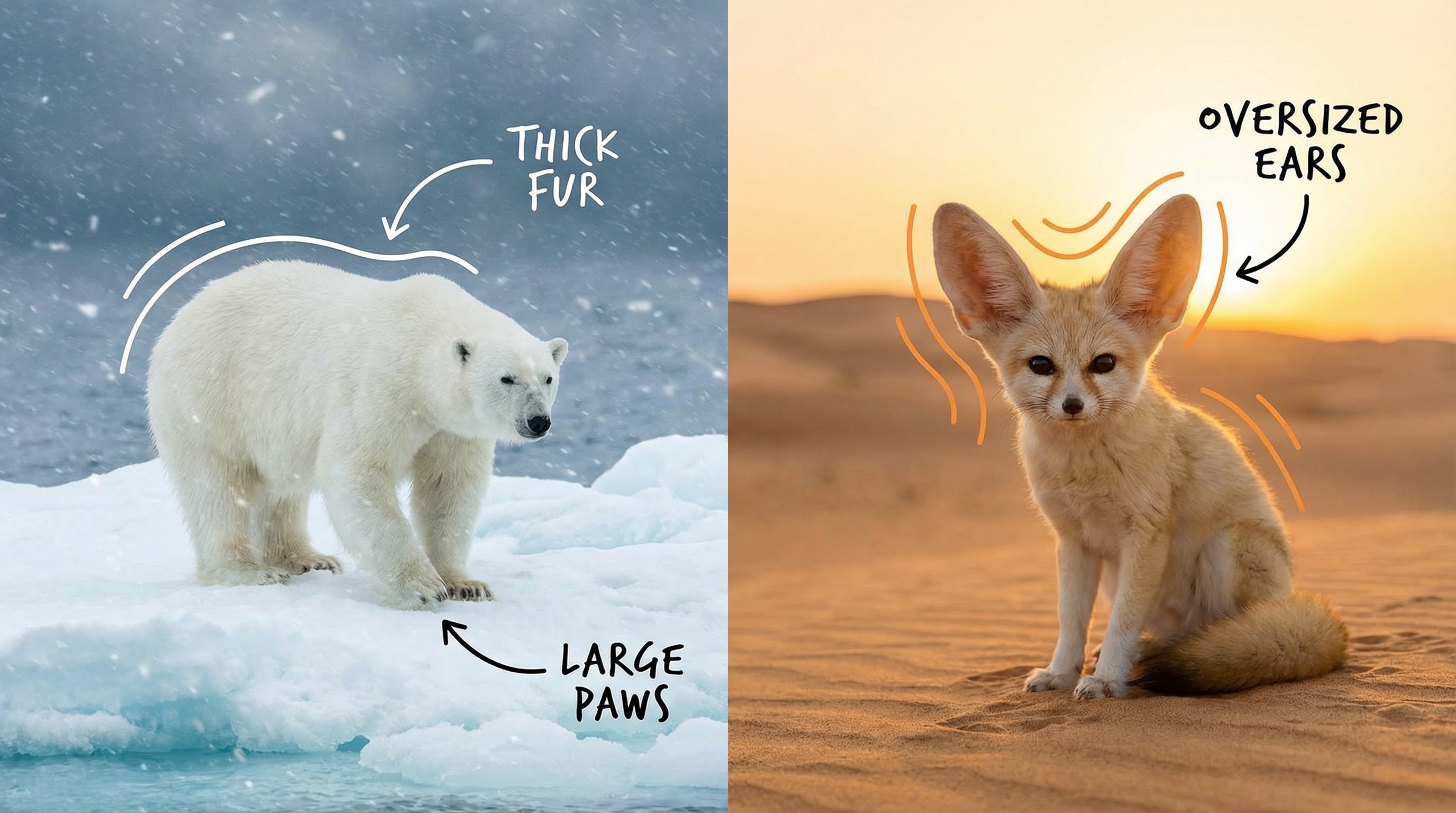
Consider the polar bear: thick fur, blubber, and large paws are all adaptations for arctic life. Or the desert fox with huge ears to dissipate heat. These are real-life 'superpowers' for survival!
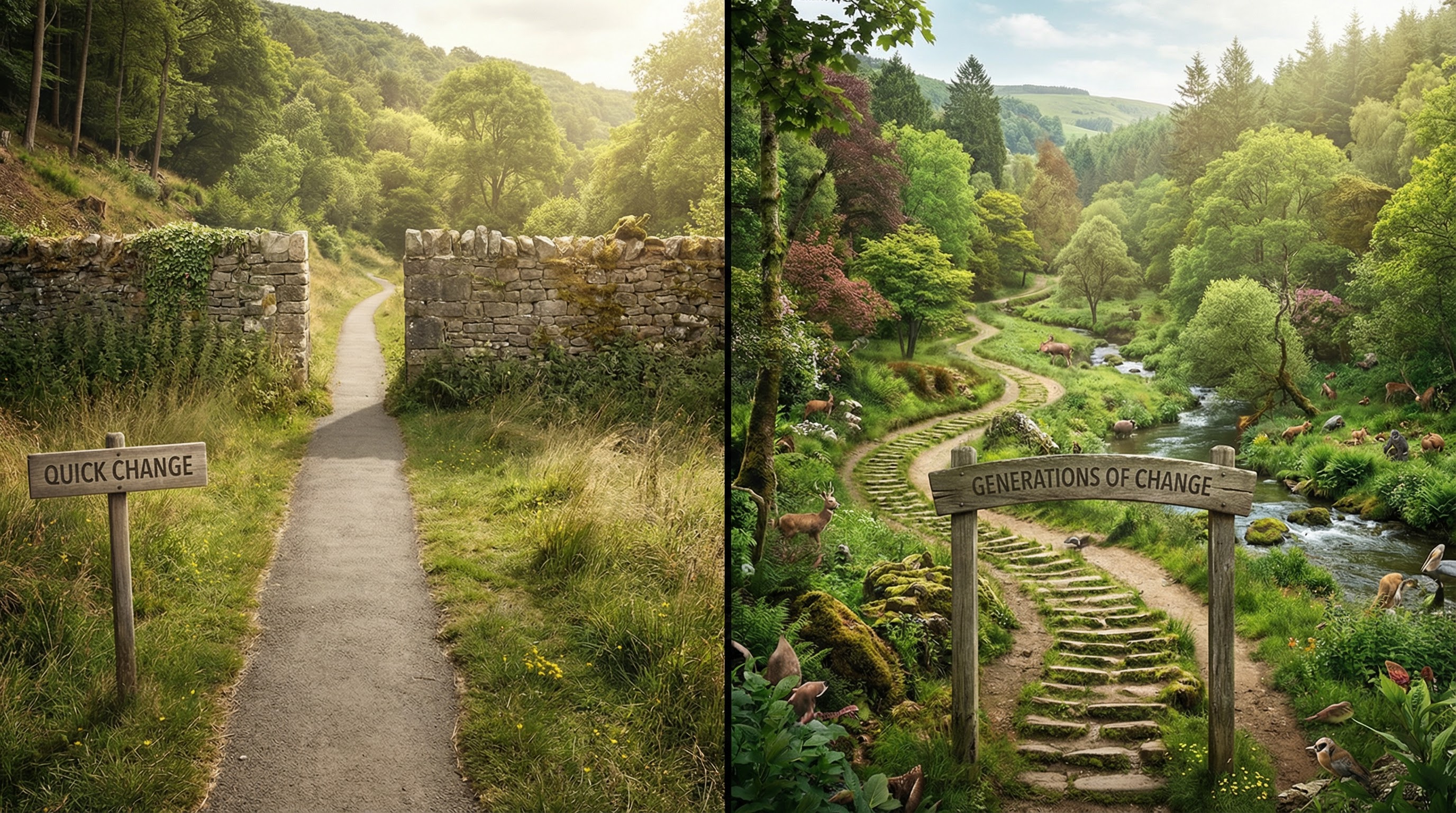
Some think animals *choose* to adapt or change quickly. But adaptations are not conscious choices; they are gradual, random genetic mutations that become common over countless generations through natural selection.
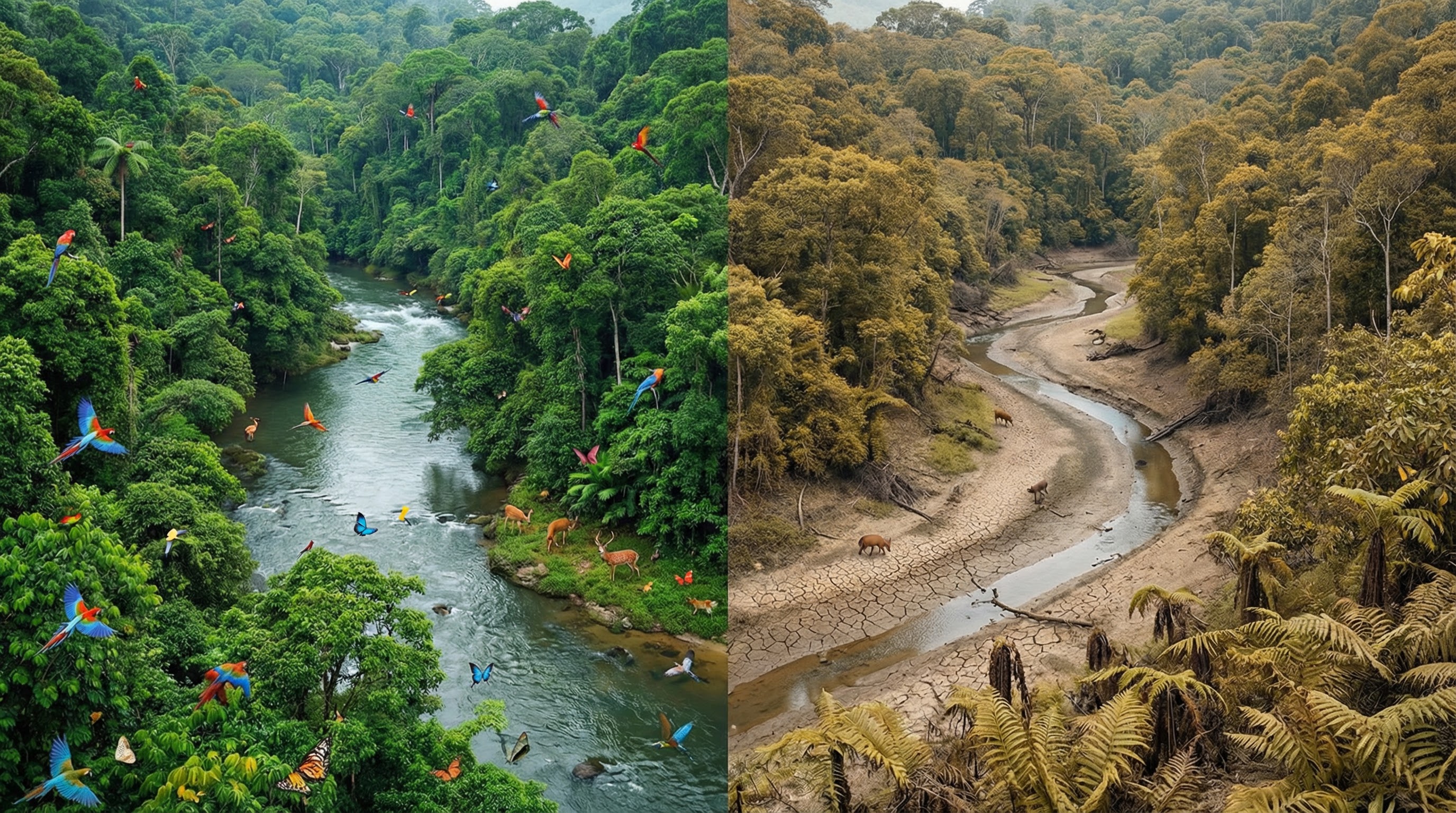
Adaptations truly unlock nature's survival secrets. But what happens when environments change too quickly for species to adapt naturally? That's a critical question scientists are exploring today.
Describe any idea in a sentence and Remee builds it for you — stories, games and quizzes on whatever you or your class are working on. Free to start, no card needed, and everything you make gets a link you can share anywhere.
Remee turns any idea into an illustrated story, a playable game, or an interactive quiz — at home or in the classroom.