 Lesson
This lesson details the physiological shift from active growth to winter dormancy, focusing on cellular protection against ice crystal formation.
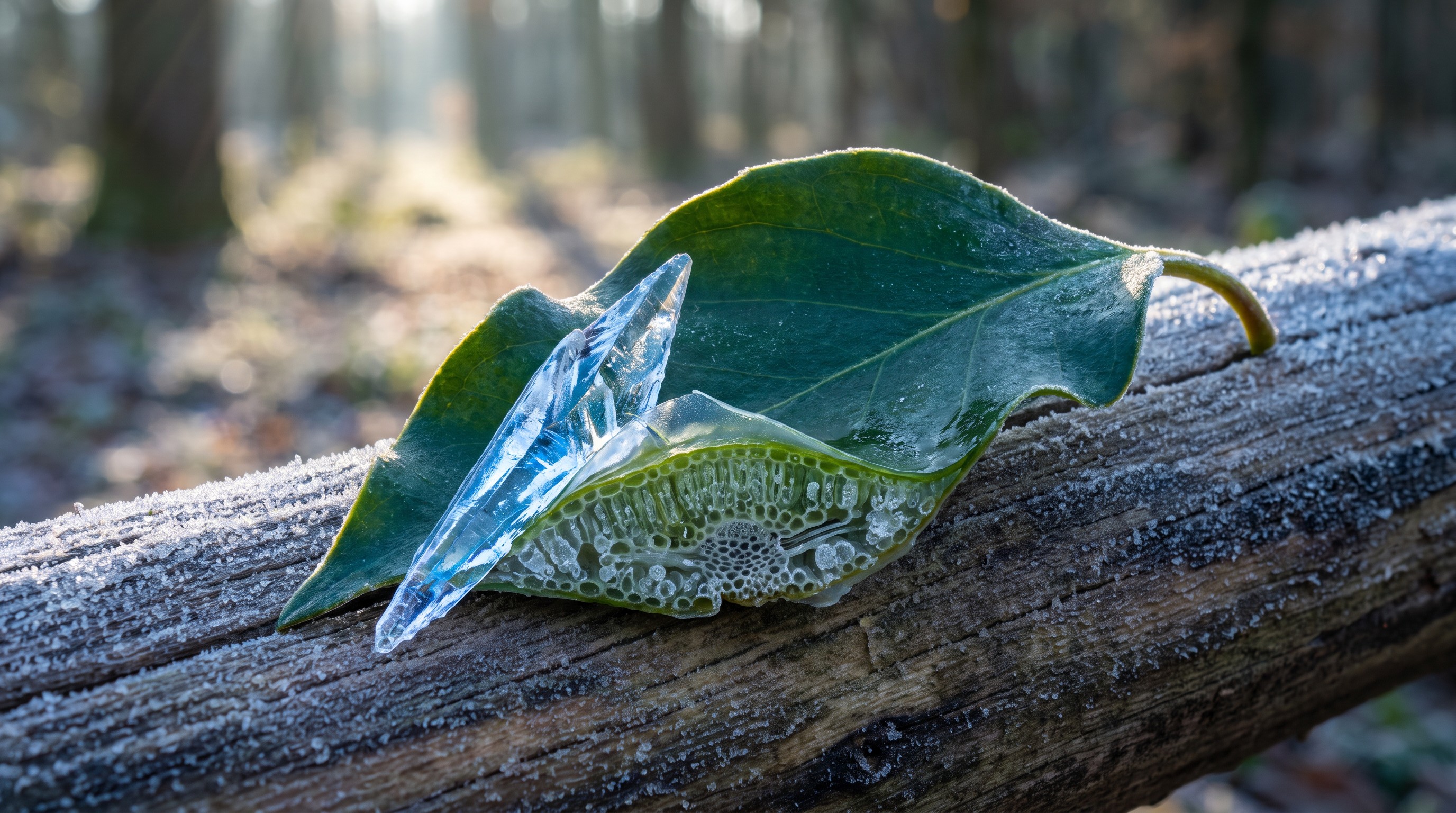
As temperatures drop, the lush activity of summer halts. Plants face a lethal challenge: if the water inside their cells freezes, the resulting ice crystals will rupture delicate cell membranes.
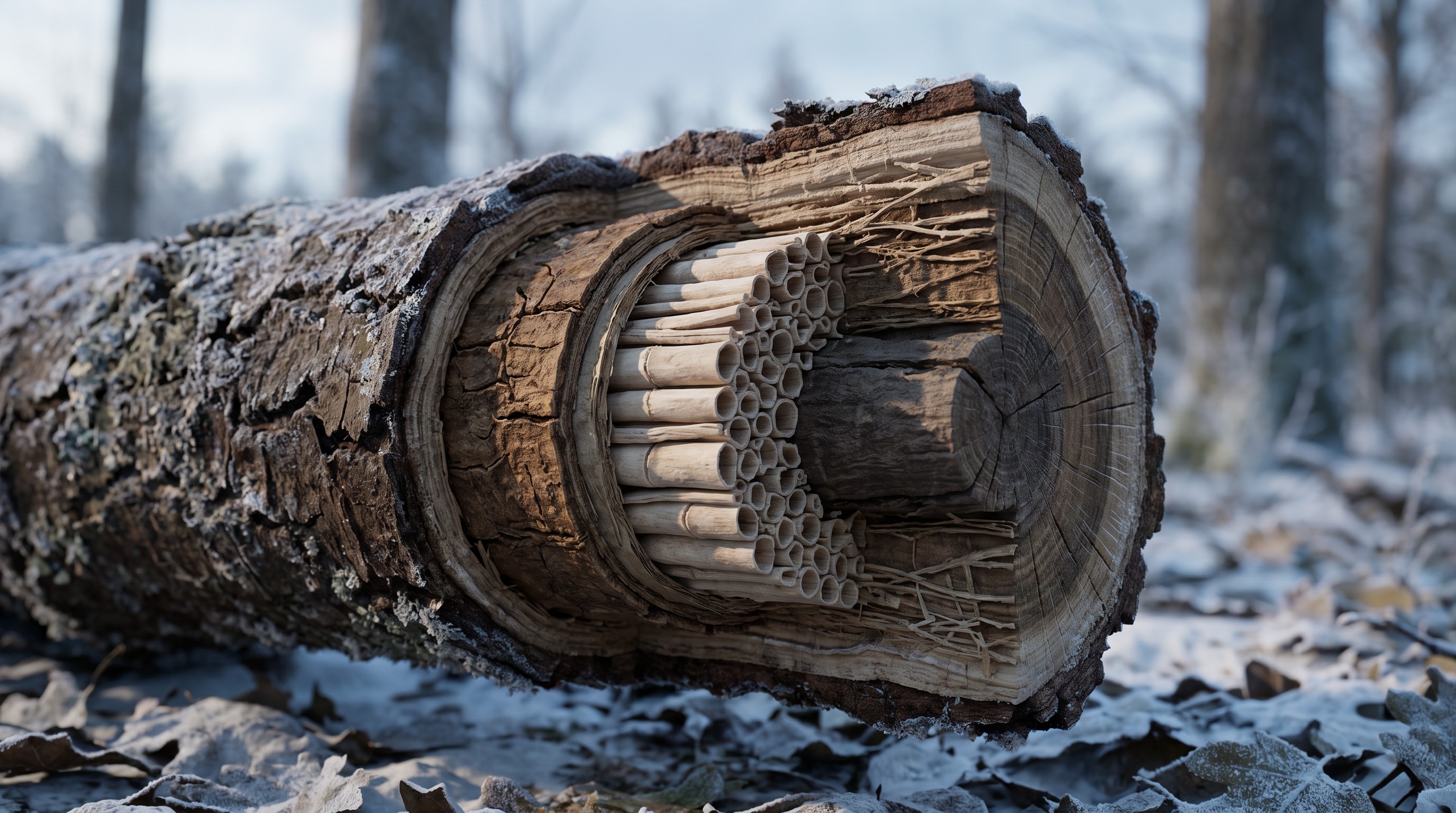
Plants enter dormancy, a state of metabolic suspension. They stop growing and shift energy toward 'winter-proofing' their tissues, essentially preparing to survive months without liquid water movement through the xylem.
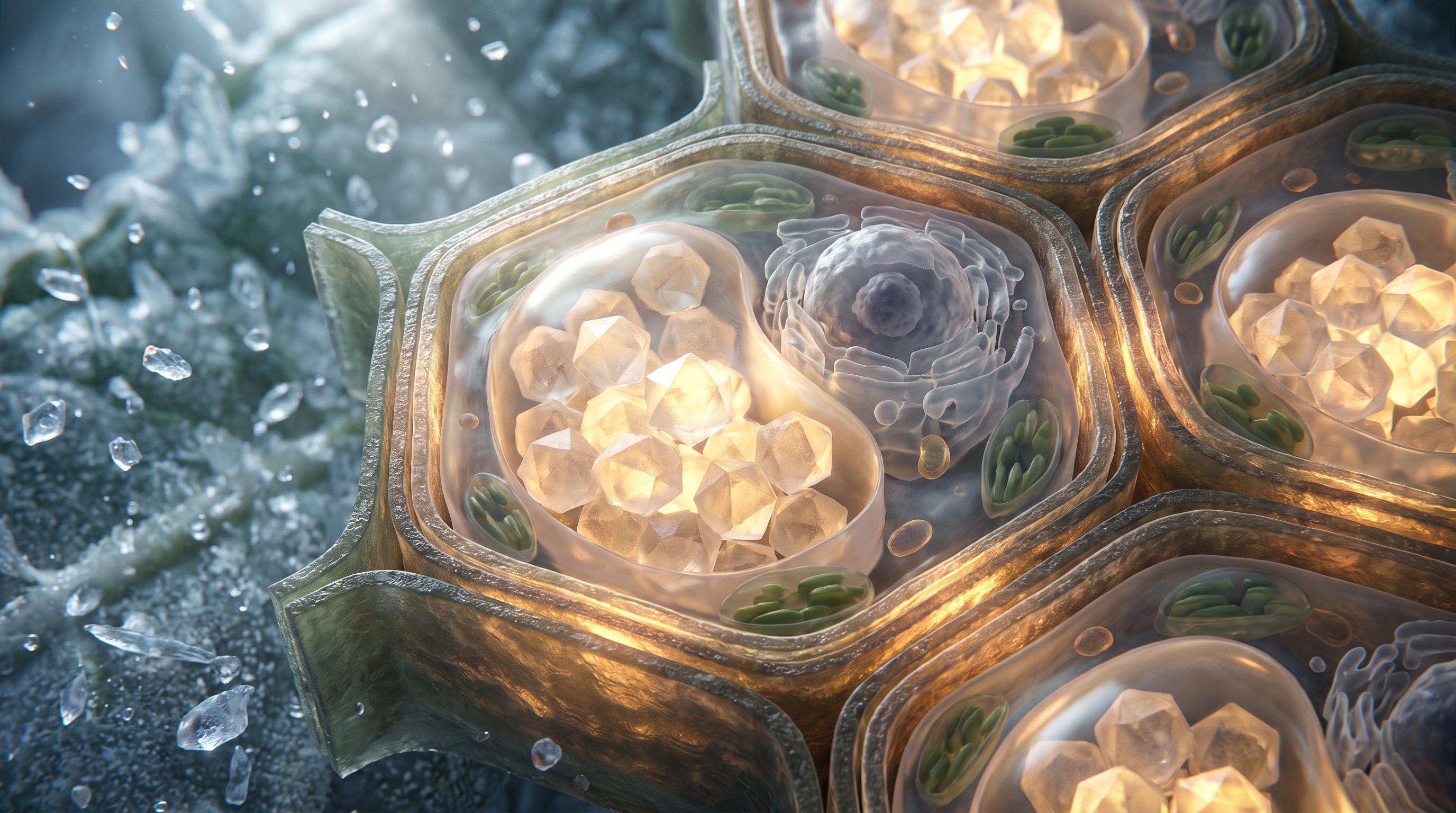
To prevent internal freezing, plants produce 'antifreeze' proteins and increase sugar concentrations within the cytoplasm. This lowers the freezing point of the cell sap, keeping it liquid despite the cold.

Look at an evergreen needle versus a deciduous leaf in late autumn. Why do you think the evergreen keeps its needles while the oak drops its leaves? Consider the water loss risk.
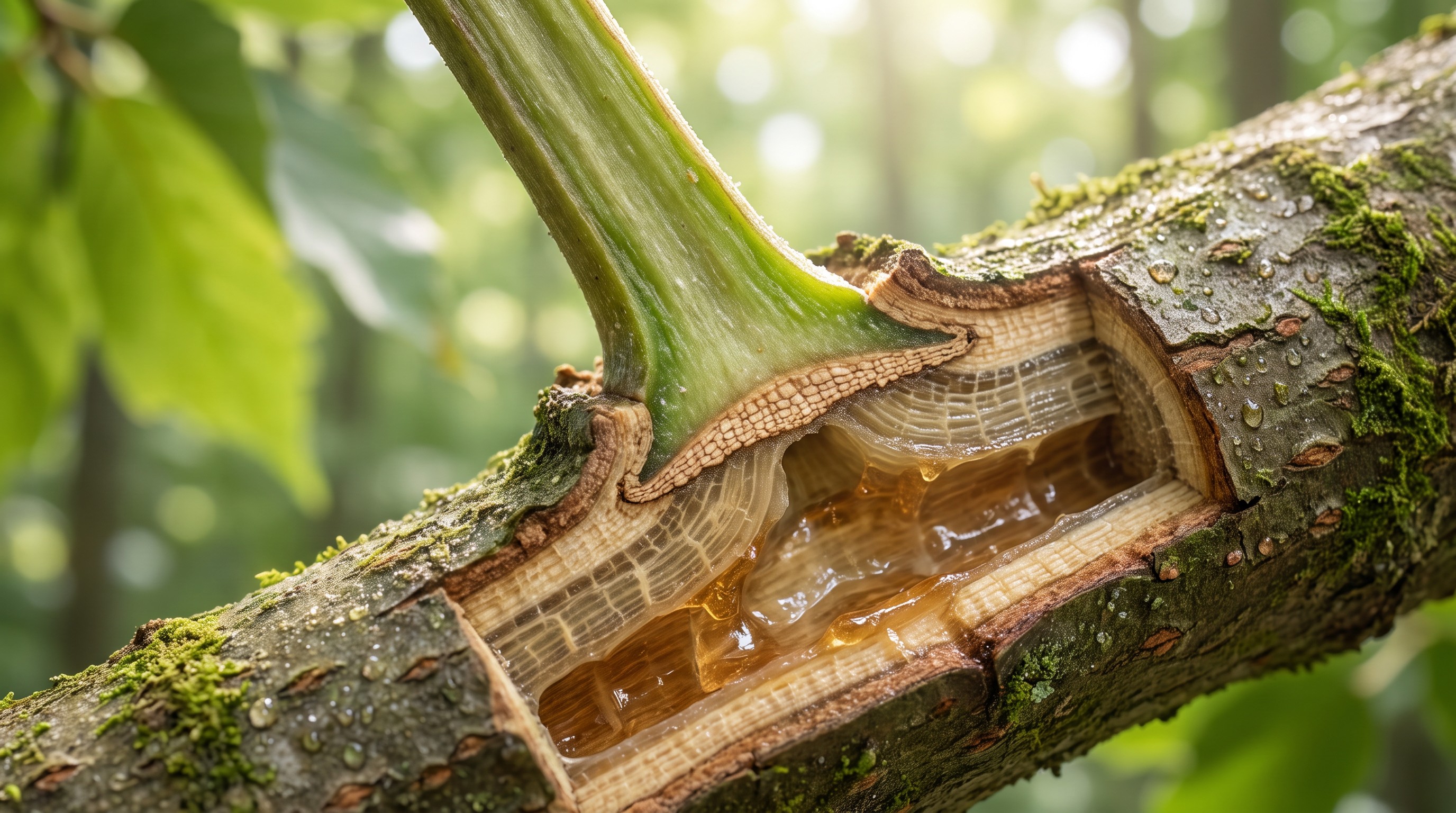
Deciduous plants drop leaves to prevent transpiration, which would otherwise pull water out of the roots that the frozen ground cannot replace. This 'abscission' seals the connection point perfectly.
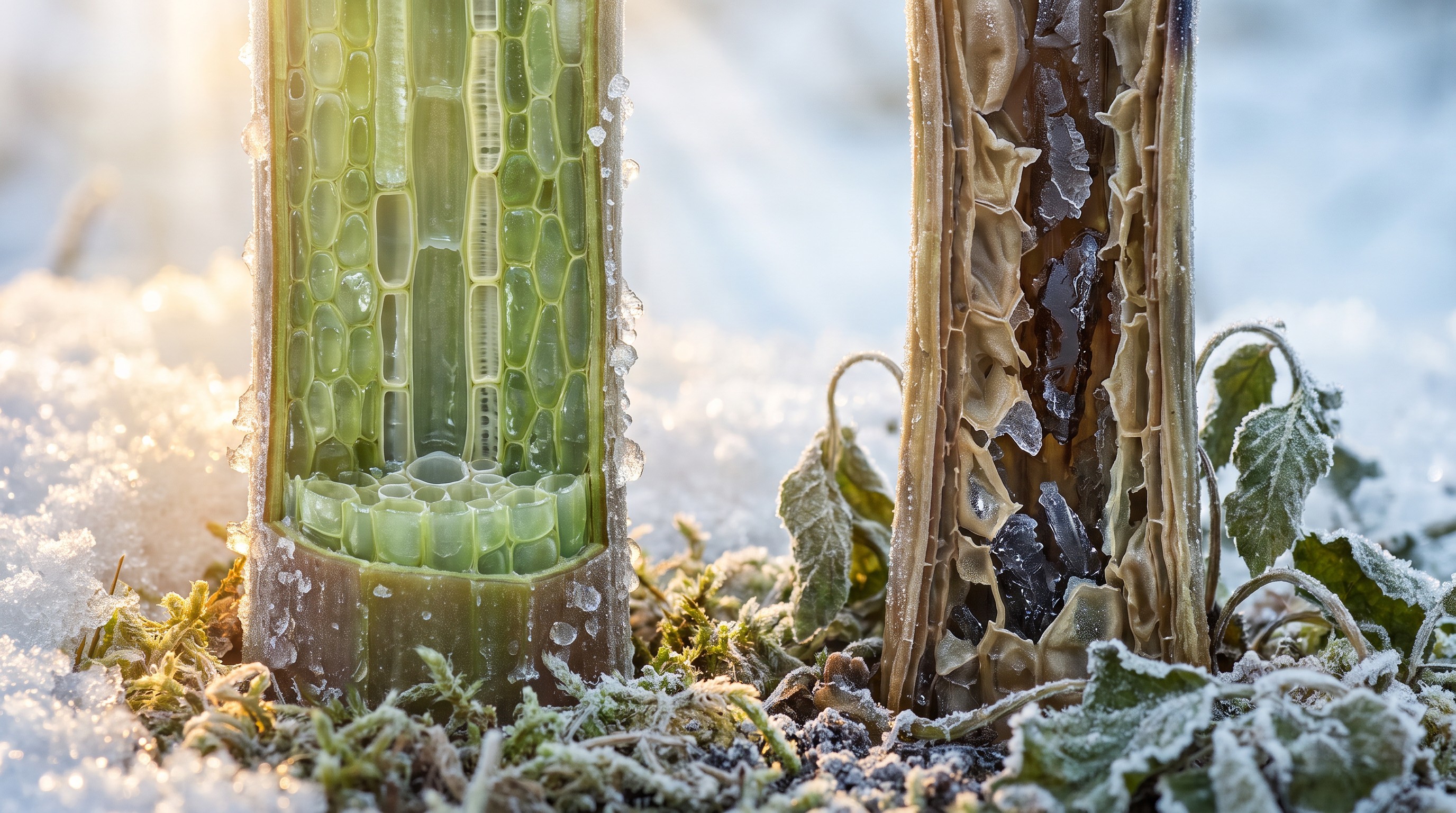
Some assume plants just 'sleep' through winter, but they aren't merely inactive. They are actively synthesizing protective solutes, whereas a dead plant would simply dry out and collapse entirely.

We’ve seen how plants manage water and cellular integrity to survive the cold. But what triggers this shift? How do plants 'know' winter is coming before the first freeze arrives?
Describe any idea in a sentence and Remee builds it for you — stories, games and quizzes on whatever you or your class are working on. Free to start, no card needed, and everything you make gets a link you can share anywhere.
Remee turns any idea into an illustrated story, a playable game, or an interactive quiz — at home or in the classroom.